

Yamunotri, Uttarakhand
Yamunotri Yamuna Temple
Yamunotri honours the goddess Yamuna and forms part of Uttarakhand’s Chota Char Dham.
Yamuna Devi
Image source · Mayank.choudha · CC BY-SA 4.0. Resized for display; card thumbnails may be cropped.
Main deity and devotional image
Yamuna Devi
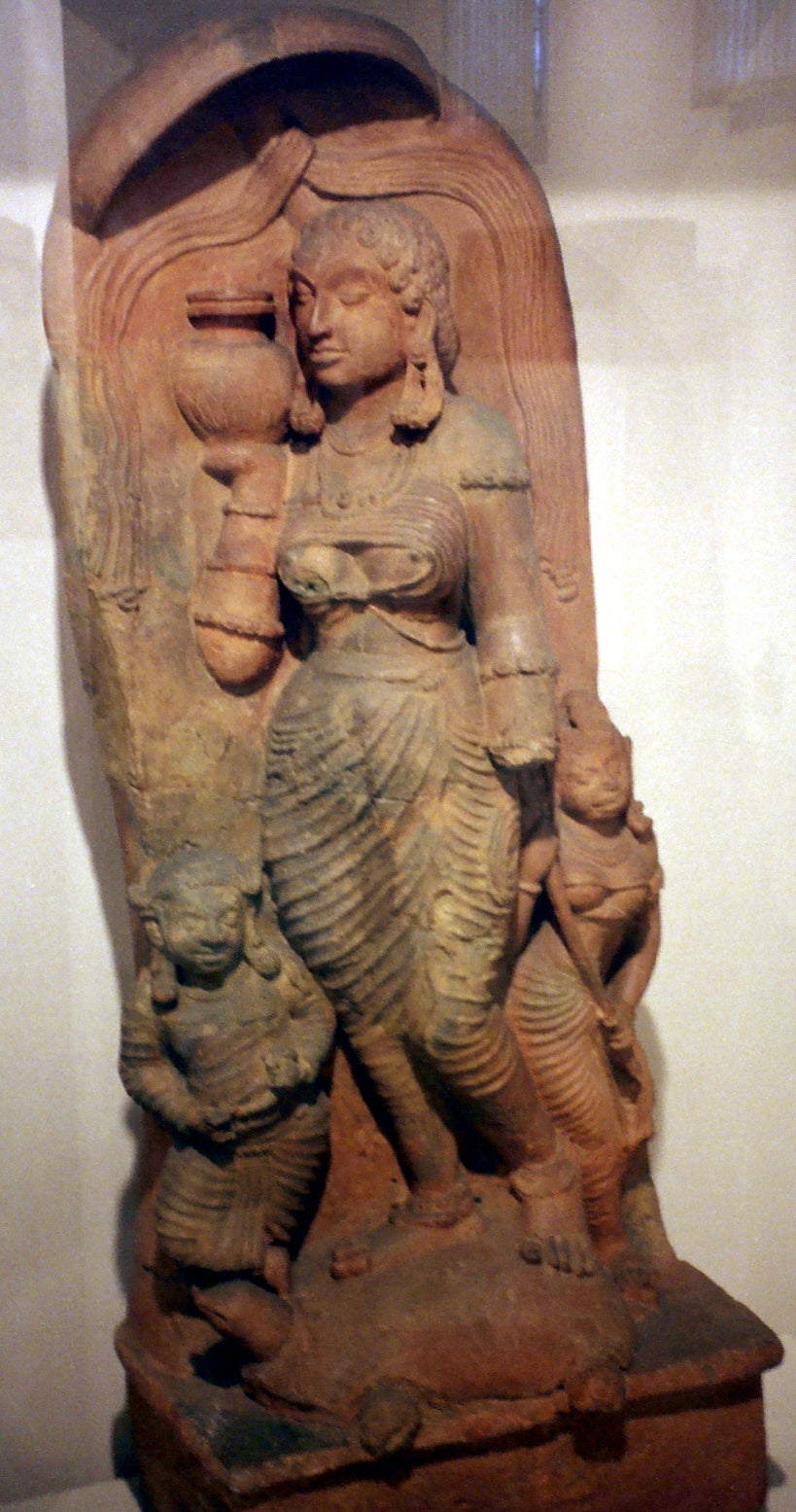
Historical sculpture of the goddess Yamuna at the National Museum, New Delhi; not the Yamunotri idol.
Image source · G41rn8 · CC BY-SA 4.0. Resized for display; card thumbnails may be cropped.Yamuna’s Himalayan shrine
Yamunotri honours the goddess Yamuna and forms part of Uttarakhand’s Chota Char Dham. The final approach is a mountain route from Janki Chatti rather than a drive to the temple door. The shrine’s combination of cold mountain water and hot springs is one of its most distinctive features.
A temple rebuilt in a demanding landscape
The temple has been rebuilt following damage in the Himalayan environment, with royal patronage remembered in its history. The structure visible today should not be described as an untouched ancient building. Its continued renewal is part of the story of maintaining worship in a place affected by severe weather and difficult access.
Yamuna, Surya and Yama
Yamuna is traditionally understood as the daughter of Surya and sister of Yama. The local account of the sage Asit connects his devotion with the sacred waters of the region. These narratives explain why the river is approached as a divine presence, while the actual source beyond the temple remains a separate geographical location.
Surya Kund and Divya Shila
The hot spring known as Surya Kund and the sacred Divya Shila are important parts of the temple precinct. Pilgrims associate food prepared using the spring’s heat with prasadam. Follow the permitted procedure and local staff directions; the boiling water is not a place for unsupervised bathing or experimentation.
Home devotion and the winter seat
The winter worship tradition is associated with Kharsali. A home prayer to Yamuna can use clean water, jasmine or lotus according to household custom, with a lamp placed safely away from fabric and flowers. No large shopping list or special river water purchase is necessary for a simple devotional observance.
The seasonal pilgrimage
Opening and closing ceremonies follow the annual religious calendar, and weather determines practical access. The trek, darshan and return take more planning than the map distance suggests. Reserve time for rest and check official conditions before travelling, especially when the pilgrimage season begins or approaches its close.
Special flowers and leaves for home puja
Flowers: Lotus, jasmine and rose.
Leaves or sacred grass: No compulsory leaf is specified for this simple home offering.
For prayer to the river goddess, choose a small fresh flower offering with clean water. Lotus and jasmine are suitable household options, not a claim about an exclusive Himalayan temple prescription. After worship, separate biodegradable flowers from packaging and dispose of them responsibly rather than putting them into a river.
This is a home-worship guide, not a confirmed daily offering schedule for this temple. Follow your family tradition for a formal rite, and check locally before carrying flowers or food into a temple. Aromatic foliage, leaves and sacred grass are identified separately from flowers.
Home Puja product list
Choose the deity-specific flowers below, then add only the supplies you need. The links lead to Divine Flowers product or collection pages, where the current selection and availability can be checked. Reuse the lamp, vessels and bell you already own.
Flowers and leaves to shop
 Pink Lotus
 Malli / Jasmine Loose
 Red Rose Buttons


Basic home-puja supply list
- Diya or lamp, cotton wicks and puja oil suitable for your lamp.
- Puja plate, water bowl and spoon to keep flowers, water and food offerings separate.
- Puja powders such as the kumkum, turmeric or sandal preparation used in your household tradition. Choose the relevant items; all powders are not required for every deity.
- Dhoop or incense and a stable holder, if incense is part of your practice.
- Clean water and a modest food offering such as fruit, prepared according to the family’s custom. Use a clean cloth and a stable place for the deity image.
Optional festival or vrata additions
Puja garland · Kalash or lota · Puja bell · Fresh leaves · Other puja samagri.
A formal vrata or priest-led ceremony may need mango leaves, betel leaves, coconut, rice and additional materials. Obtain that ceremony’s list before shopping. These optional items are not all necessary for a daily prayer, and product purchases do not guarantee spiritual or material outcomes.
Nearby temples and pilgrimage stops
These include local shrines and longer regional pilgrimage options. They are not all within walking distance. Use the map links to plan travel; a guide link appears where a separate page is available.
Yamuna Temple
Kharsali
Yamuna; the winter seat of the goddess.
View on map →Shani Dev Temple
Kharsali
Shani, traditionally associated with the same solar family as Yamuna.
View on map →Kashi Vishwanath Temple
Uttarkashi
Shiva; a regional extension when continuing toward Gangotri, not a nearby walk.
View on map →Location and planning your visit
Yamunotri, Uttarakhand
Janki Chatti is the usual starting point for the final route. Confirm current transport, assistance services, registration and weather through official channels. Choose the journey according to the ability of the least mobile person in your party.
Use the linked temple or government pages below for current timings, festival arrangements and permitted offerings. Daily routines and access can change; this guide does not promise a fixed queue time.
Find this temple on the map →Sources and image credits
Temple administrations, government tourism and district sources are prioritised. Sacred stories are labelled as tradition. Home-puja flower choices describe broader devotional practice rather than an exclusive temple prescription.
- uttarakhandtourism.gov.in — yamunotri
- www.uttarakhandtourism.gov.in — faith sees no fear at yamunotri
- www.uttarakhandtourism.gov.in — winter char dham circuit
Flower-tradition context: TTD’s record of flowers and aromatic foliage in Vaishnava festival worship. This record is specific to the ceremony described; it does not prescribe the daily offerings at every temple in this library.