

Srikurmam, Andhra Pradesh
Srikurmam Kurmanatha Temple
Srikurmam gives the tortoise incarnation of Vishnu a central place in active temple worship.
Kurmanatha — Vishnu in the Kurma or tortoise incarnation
Image source · Adityamadhav83 · CC BY-SA 3.0. Resized for display; card thumbnails may be cropped.
Main deity and devotional image
Kurmanatha — Vishnu in the Kurma or tortoise incarnation
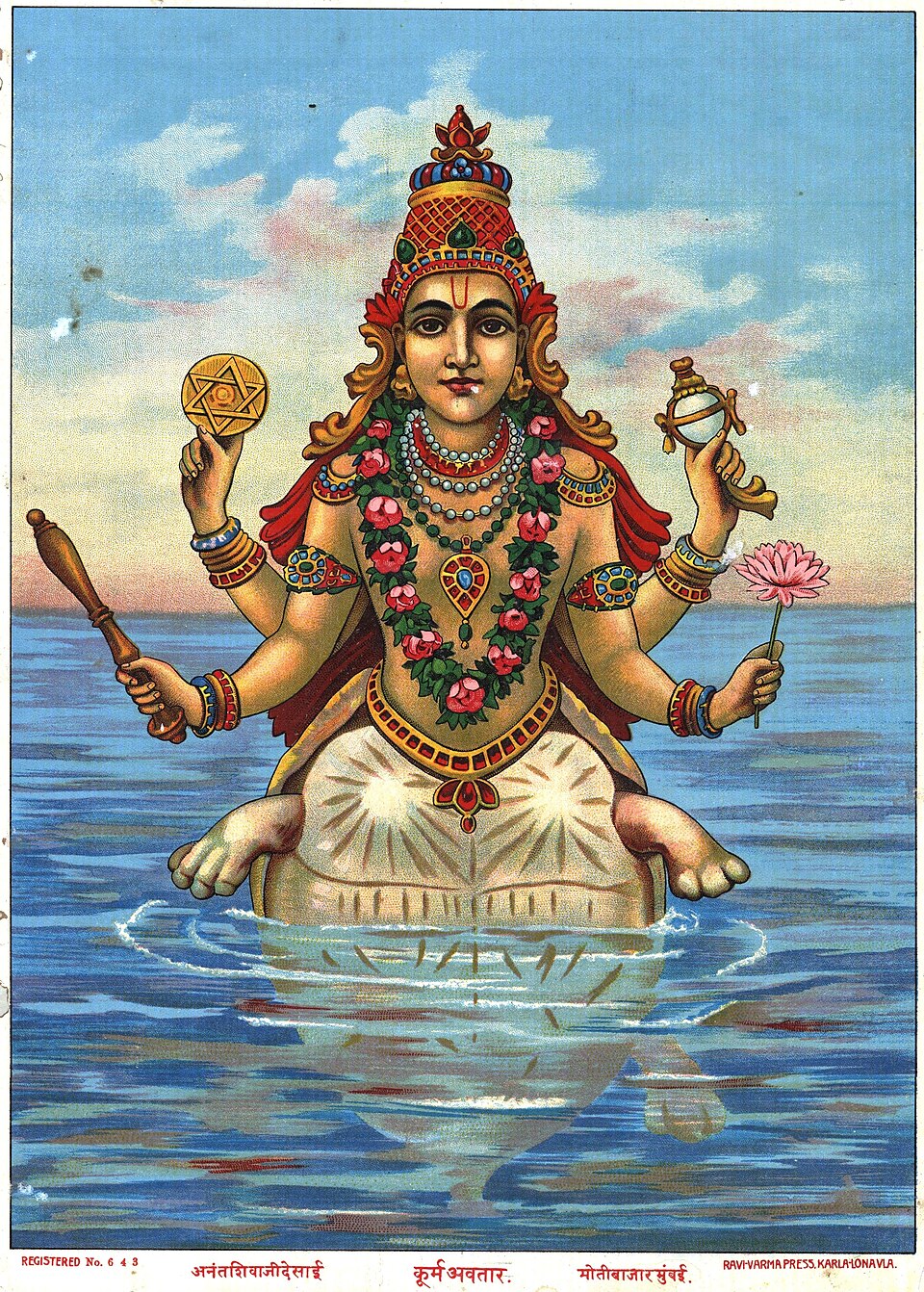
Historical Kurma-avatar illustration; not a photograph of the Srikurmam deity.
Image source · Raja Ravi Varma / Ravi Varma Press · Public domain. Resized for display; card thumbnails may be cropped.A rare sanctuary of Kurma
Srikurmam gives the tortoise incarnation of Vishnu a central place in active temple worship. Most familiar Vishnu temples emphasise Rama, Krishna or Narasimha; here the sacred identity is Kurmanatha. The shrine makes an especially meaningful pairing with Arasavalli’s Surya temple for visitors exploring the Srikakulam region.
Medieval patronage and Vaishnava heritage
The complex bears the imprint of the Eastern Ganga period and later patronage. Its history is also associated with the development of Sri Vaishnava worship and the memory of Ramanuja. Different portions of the architecture and inscriptions belong to different phases, so the temple should not be reduced to one unqualified founding date.
The tortoise and the cosmic ocean
In the broader Kurma story, Vishnu supports Mount Mandara during the churning of the ocean. The tortoise represents a divine foundation beneath a difficult cosmic undertaking. Local sacred accounts explain why this form is worshipped at Srikurmam; the cosmic narrative is a devotional framework, rather than a literal description of an event documented on the site.
Pillared halls and the sacred landscape
The compound combines regional Kalinga and southern temple features, including carved pillars, gateways and subsidiary shrines. Pay attention to the relationship between the central sanctuary, the temple tank and the surrounding sacred sites. The temple’s own account also describes a wider network of Shiva shrines around the Kurma kshetra.
Darshan and respectful observation
The unusual form of the principal deity is the reason to allow an unhurried visit. Ask temple staff about the permitted route and photography rather than treating a devotional illustration as a guide to the sanctum. Tulsi and simple fragrant flowers are suitable starting points for Vishnu home worship; the temple decides its own accepted offerings.
Festivals and regional pilgrimage
Kurma Jayanti is the natural focus for remembering this incarnation, while the temple’s own annual calendar governs special celebrations and sevas. A Srikakulam pilgrimage can connect Kurmanatha, Surya and Shiva without pretending they are one sacred group. Plan separate travel time for each, especially during festival crowds.
Special flowers and leaves for home puja
Flowers: Jasmine, lotus and rose.
Leaves or sacred grass: Tulsi / tulasi leaves.
Tulsi is the distinctive leaf offering in many Vishnu traditions. Jasmine (malli / mogra), lotus (thamarai / kamal) and rose are familiar accompanying flowers. Maruvam / marukozhundhu and davanam are aromatic foliage used in some Vaishnava flower offerings; their documented use at Tirumala does not establish a compulsory rule for every Vishnu shrine.
This is a home-worship guide, not a confirmed daily offering schedule for this temple. Follow your family tradition for a formal rite, and check locally before carrying flowers or food into a temple. Aromatic foliage, leaves and sacred grass are identified separately from flowers.
Home Puja product list
Choose the deity-specific flowers below, then add only the supplies you need. The links lead to Divine Flowers product or collection pages, where the current selection and availability can be checked. Reuse the lamp, vessels and bell you already own.
Flowers and leaves to shop
 Malli / Jasmine Loose
 Pink Lotus
 Red Rose Buttons


Tulsi is part of the devotional list above. A dedicated tulsi product was not confirmed in the store selection used for this guide; check the Fresh Leaves collection or source it locally. Do not replace it automatically with an unrelated leaf.
Basic home-puja supply list
- Diya or lamp, cotton wicks and puja oil suitable for your lamp.
- Puja plate, water bowl and spoon to keep flowers, water and food offerings separate.
- Puja powders such as the kumkum, turmeric or sandal preparation used in your household tradition. Choose the relevant items; all powders are not required for every deity.
- Dhoop or incense and a stable holder, if incense is part of your practice.
- Clean water and a modest food offering such as fruit, prepared according to the family’s custom. Use a clean cloth and a stable place for the deity image.
Optional festival or vrata additions
Puja garland · Kalash or lota · Puja bell · Fresh leaves · Other puja samagri.
A formal vrata or priest-led ceremony may need mango leaves, betel leaves, coconut, rice and additional materials. Obtain that ceremony’s list before shopping. These optional items are not all necessary for a daily prayer, and product purchases do not guarantee spiritual or material outcomes.
Nearby temples and pilgrimage stops
These include local shrines and longer regional pilgrimage options. They are not all within walking distance. Use the map links to plan travel; a guide link appears where a separate page is available.
Arasavalli Suryanarayana Temple
Srikakulam
Surya; another major shrine in the same district.
View on map → · Read guide →Sri Mukhalingam Temple
Mukhalingam, Srikakulam district
Shiva; a major Eastern Ganga heritage destination farther inland.
View on map →Uma Rudra Koteswara Temple
Srikakulam town
Shiva; included in the regional sacred landscape described by the Kurmanatha temple.
View on map →Location and planning your visit
Srikurmam, Andhra Pradesh
Use Srikakulam as the main road base. Srikurmam and Arasavalli can be planned together, while Mukhalingam is a longer regional outing. Consult the linked temple information for worship details and confirm access locally.
Use the linked temple or government pages below for current timings, festival arrangements and permitted offerings. Daily routines and access can change; this guide does not promise a fixed queue time.
Find this temple on the map →Sources and image credits
Temple administrations, government tourism and district sources are prioritised. Sacred stories are labelled as tradition. Home-puja flower choices describe broader devotional practice rather than an exclusive temple prescription.
Flower-tradition context: TTD’s record of flowers and aromatic foliage in Vaishnava festival worship. This record is specific to the ceremony described; it does not prescribe the daily offerings at every temple in this library.