
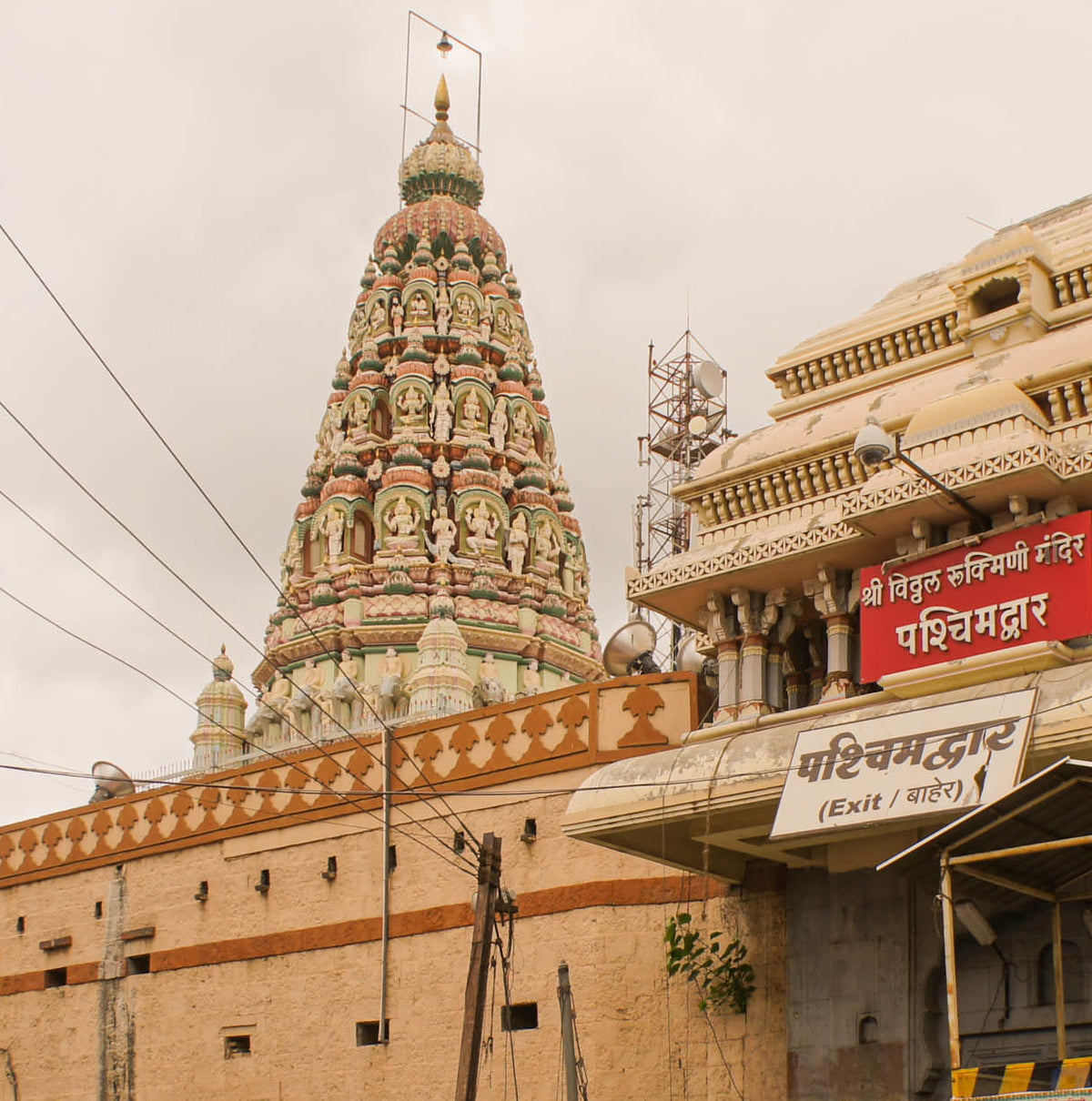
Pandharpur, Maharashtra
Pandharpur Vitthal Rukmini Temple
Pandharpur on the Chandrabhaga River is the heart of Maharashtra’s Warkari pilgrimage. Vitthal’s standing form, with hands on his hips, is inseparable from the songs and journeys of generations of devotees.
Vitthal / Vithoba and Rukmini
Image source · Udaykumar PR · CC BY 3.0. Resized for display.

Main deity and devotional image


Vitthal / Vithoba and Rukmini
Pandharpur on the Chandrabhaga River is the heart of Maharashtra’s Warkari pilgrimage. Vitthal’s standing form, with hands on his hips, is inseparable from the songs and journeys of generations of devotees.
History and sacred tradition
The Pundalik narrative explains the brick on which Vitthal stands and the value placed on service to one’s parents. The devotional world of Dnyaneshwar, Namdev, Eknath and Tukaram helped shape the pilgrimage’s enduring influence. The temple’s history is therefore a story of saints, poetry, community and patronage rather than a single founding date.
Architecture and what to notice
The complex includes the principal Vitthal shrine and Rukmini’s worship space, while the surrounding streets and riverfront form the wider pilgrimage setting. The Namdev step carries particular devotional meaning. During busy periods, queue arrangements may determine how visitors encounter these features.
Festivals and worship
Ashadhi and Kartiki Ekadashi are major pilgrimage occasions. Warkari dindis and palkhi journeys express devotion through walking, collective singing and disciplined participation. Current procession routes and access arrangements should be checked before travel; a festival visit needs more time than an ordinary darshan stop.
A detail worth understanding
Vitthal devotion is often expressed through abhang singing and remembrance of the divine name. Tulsi is especially relevant to this Vaishnava setting. A home-puja section should connect these practices with simple offerings, rather than imply that elaborate purchases are required to join the devotional tradition.
Special flowers and leaves for home puja
| Offering | Home-puja guidance |
|---|---|
| Flowers | Jasmine, rose and lotus |
| Leaves and other materials | Tulsi / tulasi leaves or a tulsi garland |
Tulsi has a special place in Krishna worship. Jasmine and rose are practical choices for a small home garland, while lotus can be reserved for a special occasion. Do not treat an elaborate festival flower display as a minimum requirement for everyday worship.
Choose fresh, clean flowers and remove packaging before offering. These are broader household traditions, not a claim that every temple accepts every listed item. Follow your family’s custom for special vratas and ceremonies.
Home puja products
Choose the flowers and basic supplies you need. Each card opens the actual product page; prices and availability come from the store.
Flowers and deity-specific offerings
 Tulsi (FL-TLS-008)$6.00View product →
 Malli / Jasmine Loose (FF-MAL-008)$8.00View product →
 Red Rose Buttons (FF-BRR-002)$6.00View product →
 Pink Lotus (FF-LOP-011)From $2.00View product →
Home-puja essentials
 Brass Gulab Jyoti Deepam – 2 Inch Lotus Diya$5.40View product →
 Poo Thiri (Puja Lamp Wicks)$1.00View product →
 Pooja Deepam Oil (Diya / Vilakku Oil)$2.00View product →
Prepare a clean prayer space, water and a modest food offering according to family custom. Place the lamp securely, use oil suitable for it and keep flames away from flowers and fabric. Incense, a bell or additional vessels are optional; a simple daily prayer does not require every item.
Nearby temples and pilgrimage stops
Local shrines and longer regional options are distinguished below. Map links help you plan the journey; guide links appear where a separate page is available.
Pundalik Temple
Pandharpur riverfront
A shrine connected with the central narrative of the pilgrimage.
View on map →Vishnupad Temple
Pandharpur
A river-related sacred stop whose access depends on local conditions.
View on map →Location and planning your visit
Pandharpur, Maharashtra
Plan through Pandharpur and check festival accommodation early. Observe river restrictions and do not assume that a sacred bathing location is safe during high water.
Check the linked temple or government sources for current timings, festival dates, permitted offerings and entry rules.
Find this temple on the map →Sources and image credits
Historical accounts and sacred traditions are distinguished in the guide. Consult the source pages for fuller context and current visitor information.
Temple image: Image source · Udaykumar PR · CC BY 3.0. Resized for display.
Devotional image: Image source · Raja Ravi Varma · Public domain. Resized for display.