

Madurai, Tamil Nadu
Meenakshi Sundareswarar Temple
A city shaped around its goddess: explore Madurai’s sacred marriage, Nayak craftsmanship and living festival streets.
Meenakshi Amman and Sundareswarar
Image source · Redmanored · CC BY-SA 4.0. Resized for display; the layout may crop card thumbnails.

Overview and sacred identity
Meenakshi Sundareswarar Temple stands at the heart of old Madurai, south of the Vaigai River. Its paired sanctums honour Meenakshi, the sovereign goddess of the city, and Shiva as Sundareswarar. The temple’s significance extends beyond its famous towers: worship, markets, artisans and processional streets together form a living sacred centre.
The Tamil names Angayarkanni and Chokkanathar help visitors recognise the deities in songs and local conversation. Meenakshi’s identity as a queen is essential to understanding the shrine. Her wedding festival celebrates divine partnership while retaining her central place in Madurai’s devotional life.
History and historical developments
The shrine has Pandya foundations and a long place in Tamil Shaiva devotion. Much of the monumental complex visible today reflects rebuilding and expansion under the Madurai Nayaks during the sixteenth and seventeenth centuries. Its history therefore belongs to several generations of builders, patrons and worshippers.
Treat the Pandya queen’s sacred biography and the account of her marriage to Shiva as temple tradition, rather than a dated royal chronicle. Inscriptions and architectural phases provide a different kind of evidence. Reading both together explains why the site can be ancient in devotion while many visible halls belong to later centuries.
Architecture and what to notice
Look beyond the colourful gopurams to the Golden Lotus Tank, the paired shrine arrangement and the sculpted mandapas. The Thousand Pillar Hall demonstrates how columns organise movement as well as display narrative sculpture. The towers function as thresholds; the inner courts progressively draw attention towards worship.
A useful way to explore is to study one hall slowly after darshan. Notice the difference between a guardian figure, a deity image and a narrative scene. This makes the carved stone meaningful rather than simply an impressive backdrop. Access to particular halls and museum areas can follow separate arrangements.
Main deities and the sacred marriage
Meenakshi is commonly represented with a parrot and a distinctive regal presence. Sundareswarar is worshipped in the Shiva sanctum. The marriage narrative connects the goddess’s rule of Madurai with Shiva’s arrival as the beautiful bridegroom.
Vishnu’s role in the sacred marriage gives the festival a wider devotional setting. The Kallazhagar celebration associated with the Vaigai is part of the broader Chithirai festival landscape; it should not be confused with an everyday ritual inside Meenakshi’s sanctum.
Main deity and devotional image
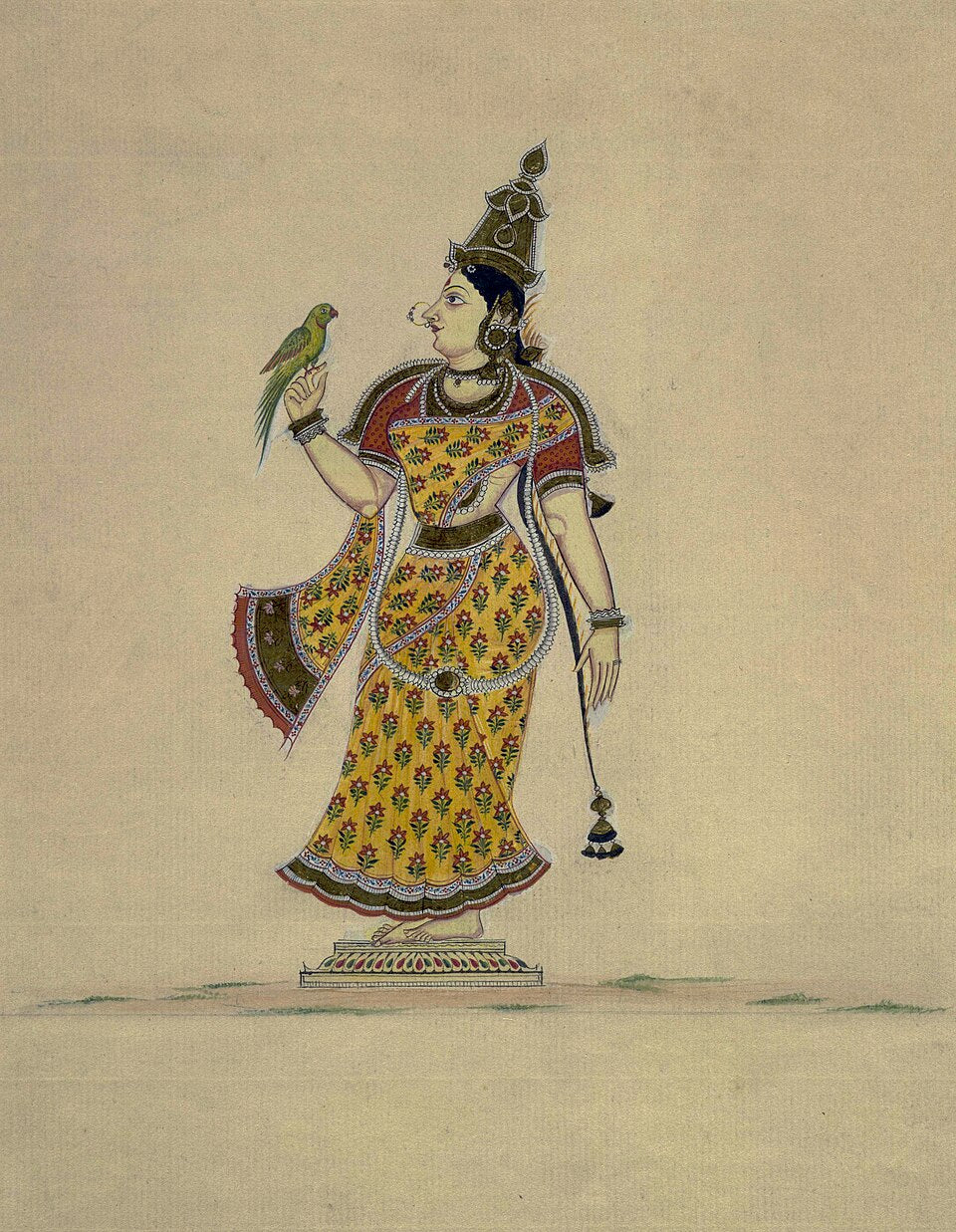
Historical devotional painting of Meenakshi; not a photograph of the sanctum.
Image source · Unknown artist, circa 1820 · Public domain. Resized for display; the layout may crop card thumbnails.
Festivals and major annual events
Chithirai is the principal festival season, with the divine marriage and processions bringing worship into the streets. Avani Moolam celebrates Shiva’s sacred acts associated with Madurai. Navaratri highlights the goddess, while the float festival connects the deities with the Vandiyur tank.
Festival days can change entry routes and make a short visit much longer. Use the current temple announcement for the marriage, chariot and float dates rather than assuming that all events occur on one day.
Worship, prasadam and offerings
Darshan of the goddess and Sundareswarar is central to a visit. Archana, decorated processional images and the temple’s daily cycle of worship express different aspects of devotion. Buy offerings only after checking what attendants accept at the entrance.
Flowers for a home altar need not reproduce the temple’s ceremonial quantities or decoration. A small fresh garland and a clean place for prayer are more useful than treating an elaborate festival alankaram as a mandatory household requirement.
Nearby temples and pilgrimage stops
These are surrounding-city or regional pilgrimage options, not all within walking distance. Use the map links to plan your route and confirm travel conditions.
Koodal Azhagar Temple
Madurai city
A Vishnu Divya Desam that complements the city’s Shaiva and goddess traditions.
View on map →Tirupparankundram Subramaniaswamy Temple
Outskirts of Madurai
One of Murugan’s six sacred abodes; allow a separate journey.
View on map →Vandiyur Mariamman Temple
Vandiyur, Madurai
An Amman shrine near the large tank associated with the float festival.
View on map →Flowers and leaves for home puja
These are general home-worship options associated with the deity, not a claim about the temple’s daily flower schedule. Follow your family tradition or priest’s guidance. Leaves and sacred grass are listed separately from flowers. Temple offerings must follow local rules.
- Flowers: Jasmine, rose, marigold, chrysanthemum and hibiscus, according to family custom.
- Leaves or sacred grass: Leaf offerings vary by the form of the goddess and local tradition; ask your priest.
Location and planning your visit
Madurai, Tamil Nadu
Madurai Junction is the principal rail gateway, and Madurai airport serves the city. The temple lies within busy old-city streets; allow time to walk from the vehicle drop-off. Check the official temple site for current darshan hours, phone restrictions and entry arrangements before travelling.
View on mapCommon questions
Who is worshipped at this temple?
Meenakshi Amman and Sundareswarar
Which nearby temples can I include?
Koodal Azhagar Temple, Tirupparankundram Subramaniaswamy Temple, Vandiyur Mariamman Temple
Can I use the home-puja flower list as a temple offering list?
The flower list is for home worship. Temple priests and the administration decide which offerings are accepted and how they are presented. Confirm locally before carrying flowers, food or ritual materials.
Sources and further reading
Sources include temple administrations, government tourism and district heritage pages. Sacred stories are identified as tradition. Check the linked official pages for current timings and festival arrangements.