
Thiruvidaimarudur · Tamil Nadu
Mahalingeswaraswamy Temple, Thiruvidaimarudur
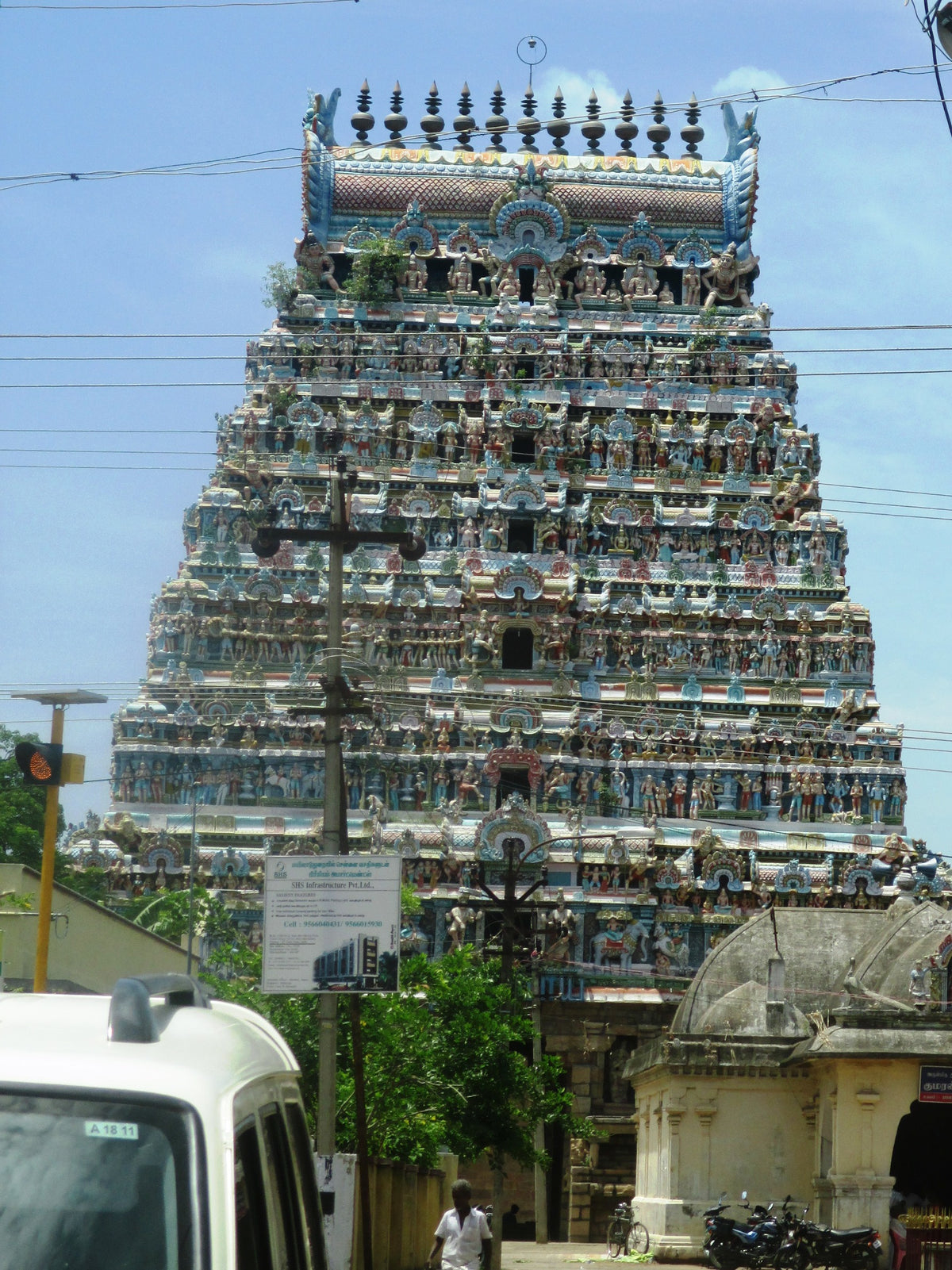
Thiruvidaimarudur’s Mahalingaswamy Temple is a major Shiva destination near Kumbakonam. Its spacious sacred setting, goddess worship and Madhya Arjuna identity reward a visit planned around more than a quick photograph of the entrance.
Mahalingeswaraswamy Temple, Thiruvidaimarudur — photograph; see source for original description Image source · Ssriram mt · CC BY-SA 4.0. Resized for display.

Temple at a glance
- Location
- Thiruvidaimarudur, Tamil Nadu, India
- Main worship
- Shiva as Mahalingaswamy; Devi as Brihatsundarakuchambika
- Visit focus
- Thiruvidaimarudur’s Mahalingaswamy Temple is a major Shiva destination near Kumbakonam.
Main deity and devotional image


Shiva as Mahalingaswamy; Devi as Brihatsundarakuchambika
History and setting
The temple belongs to the Tamil Shaiva hymn tradition and has received patronage across several historical periods. It is associated with the Thiruvavaduthurai Adheenam. Inscriptions and later additions record a continuing institution; the present complex should not be attributed wholesale to a single builder.
Sacred tradition and identity
The name Madhya Arjuna connects the shrine with the maruda tree and its position within a sacred geography. Local narratives include release from Brahmahatya affliction. Present these as devotional traditions, without promising a ritual cure or classifying the temple as one of the canonical twelve Jyotirlingas.
Architecture and what to notice
The large precinct encourages attention to processional space, gateways and the relation between Shiva and the goddess sanctuary. The Mookambika shrine is another important feature. Follow the temple’s current circulation instructions; a route associated with a sacred story should not be improvised from an incomplete online description.
Reading a Shiva temple
A linga is the central sacred form in many Shiva temples. It should not be confused with an absence of an image or with an unfinished sculpture. Nandi usually helps orient the worshipper toward the sanctuary, while the goddess shrine expresses an equally important part of the sacred setting. Where several lingas or subsidiary shrines are present, their names and local stories explain the order of a visit.
For a first visit, separate three things: the form worshipped in the main sanctuary, the processional image used during festivals, and the narrative sculptures on the walls. A photograph of a bronze Nataraja or a seated Shiva illustration may help explain devotion, but it does not automatically show the presiding deity of this particular temple. Ask for the shrine’s own name when seeking an archana or identifying an image.
Worship and offerings
Shiva worship centres on the linga, with bilva a familiar household offering. The goddess and Mookambika shrines may have distinct services and materials. Ask the counter which shrine an archana booking covers rather than assuming one purchase automatically includes every sanctuary in the complex.
Festivals and the devotional calendar
Thaipusam and the associated festival cycle are important in the temple’s calendar. Pradosham and Maha Shivaratri provide further Shaiva context. Confirm the current procession and theerthavari programme locally, especially if your plan depends on seeing a particular event rather than making ordinary darshan.
Daily, weekly and monthly planning
Daily darshan, a weekday devotional preference and a monthly lunar observance are three different things. A daily opening can include a midday closure or pauses for dressing and food offerings. A weekday associated with the deity may attract more worshippers without introducing a separate service. Lunar dates move through the ordinary calendar, so check the date as well as the temple’s own programme.
When contacting the temple, ask for the ordinary darshan window, the service you want to attend, whether it requires a booking, and the accepted offering materials. If no current weekly or monthly programme is published, plan a normal darshan rather than assuming a ceremony will take place. The festival section above identifies the relevant local context; it is not a live booking timetable.
Flowers and leaves for home puja
| Offering | Home-puja guidance |
|---|---|
| Flowers | Jasmine, rose and lotus |
| Leaves and other materials | Bilva / vilvam / bel patra leaves |
Bilva is the distinctive Shiva offering and belongs in the leaves column, not the flower column. Jasmine or rose can accompany a simple home prayer. Avoid treating every plant mentioned in ritual literature as a shopping recommendation; use the familiar materials accepted by your household or priest.
Use fresh, clean flowers and remove packaging before offering. These suggestions describe household practice; the temple may have its own rules for archana, garlands and ritual materials. Ask the authorised counter about a particular ceremony. Leaves and flowers should not be treated as medicines or promises of a particular outcome.
Home puja products
The cards below open actual products from Divine Flowers. Check the product page for options, availability and delivery details before ordering. A home flower selection is separate from a booking or offering service at the temple.
Flowers and deity-specific offerings
 Vilvam / Bel Patra (FL-VIL-003)$3.75View product →
 Malli / Jasmine Loose (FF-MAL-008)$8.00View product →
 Red Rose Buttons (FF-BRR-002)$6.00View product →
Home-puja essentials
 Brass Gulab Jyoti Deepam – 2 Inch Lotus Diya$5.40View product →
 Poo Thiri (Puja Lamp Wicks)$1.00View product →
 Pooja Deepam Oil (Diya / Vilakku Oil)$2.00View product →
For a simple household prayer, prepare a clean space, water and a modest food offering according to family custom. Place the lamp on a stable surface with space around the flame. Keep loose petals and cloth away from it. Choose the items you need rather than assuming every product is required for every prayer.
Nearby temples and regional pilgrimage stops
Use the locations below to distinguish a nearby city stop from a longer regional journey. Check each temple’s opening arrangements before setting out.
Airavatesvara Temple
Darasuram
A Chola heritage and Shiva destination in the wider Kumbakonam region.
View map → · Read temple guide →Location and visitor planning
Locate the temple in Thiruvidaimarudur near Kumbakonam. Leave time to walk the larger precinct and to find the goddess shrine. Darasuram is another regional stop requiring travel; it is not part of this temple’s enclosure.
Before leaving, confirm the opening window for that day, the final approach from your transport drop-off, and the arrangements for footwear and belongings. If anyone in the group needs assistance, ask about the actual route to the darshan area; the presence of a road to the entrance does not prove that the interior is step-free. Choose clothing suitable for worship and check any temple-specific requirement.
Leave room in the itinerary for the main sanctuary, associated shrines and a quiet look at the architecture. For each additional destination below, open its own map pin and check its own schedule. The suggestions distinguish local stops from longer regional journeys. No unverified driving time or queue duration is promised.
Find this temple on the map →Timings, festival programmes and access rules can change. Consult the official sources below or the temple directly for the day of your visit.
Frequently asked questions
Who is worshipped here?
Shiva as Mahalingaswamy; Devi as Brihatsundarakuchambika. Thiruvidaimarudur’s Mahalingaswamy Temple is a major Shiva destination near Kumbakonam. Its spacious sacred setting, goddess worship and Madhya Arjuna identity reward a visit planned around more than a quick photograph of the entrance.
What makes this temple distinctive?
The large precinct encourages attention to processional space, gateways and the relation between Shiva and the goddess sanctuary. The Mookambika shrine is another important feature. Follow the temple’s current circulation instructions; a route associated with a sacred story should not be improvised from an incomplete online description.
Which festival should I check before travelling?
Thaipusam and the associated festival cycle are important in the temple’s calendar. Pradosham and Maha Shivaratri provide further Shaiva context. Confirm the current procession and theerthavari programme locally, especially if your plan depends on seeing a particular event rather than making ordinary darshan.
Are the product suggestions required for temple entry?
No. The linked items are optional supplies for home worship. Temple admission, darshan, archana and prasadam have their own arrangements. Check the temple’s accepted materials before bringing an offering, and reuse the lamp and vessels already available at home.
Can I combine the visit with other temples?
Locate the temple in Thiruvidaimarudur near Kumbakonam. Leave time to walk the larger precinct and to find the goddess shrine. Darasuram is another regional stop requiring travel; it is not part of this temple’s enclosure. Use the separate map links below for each destination; a regional connection does not mean that the temples are within walking distance.
Sources and image credits
Temple history and devotional traditions are distinguished in this guide. Information reviewed on 20 October 2026. Current visitor arrangements should be confirmed with the temple.
Header image: Image source · Ssriram mt · CC BY-SA 4.0. Resized for display.
Devotional image: Image source · Iqbal Mohammed · CC BY-SA 2.0. Resized for display.