
Trimbak, Maharashtra
Trimbakeshwar Temple
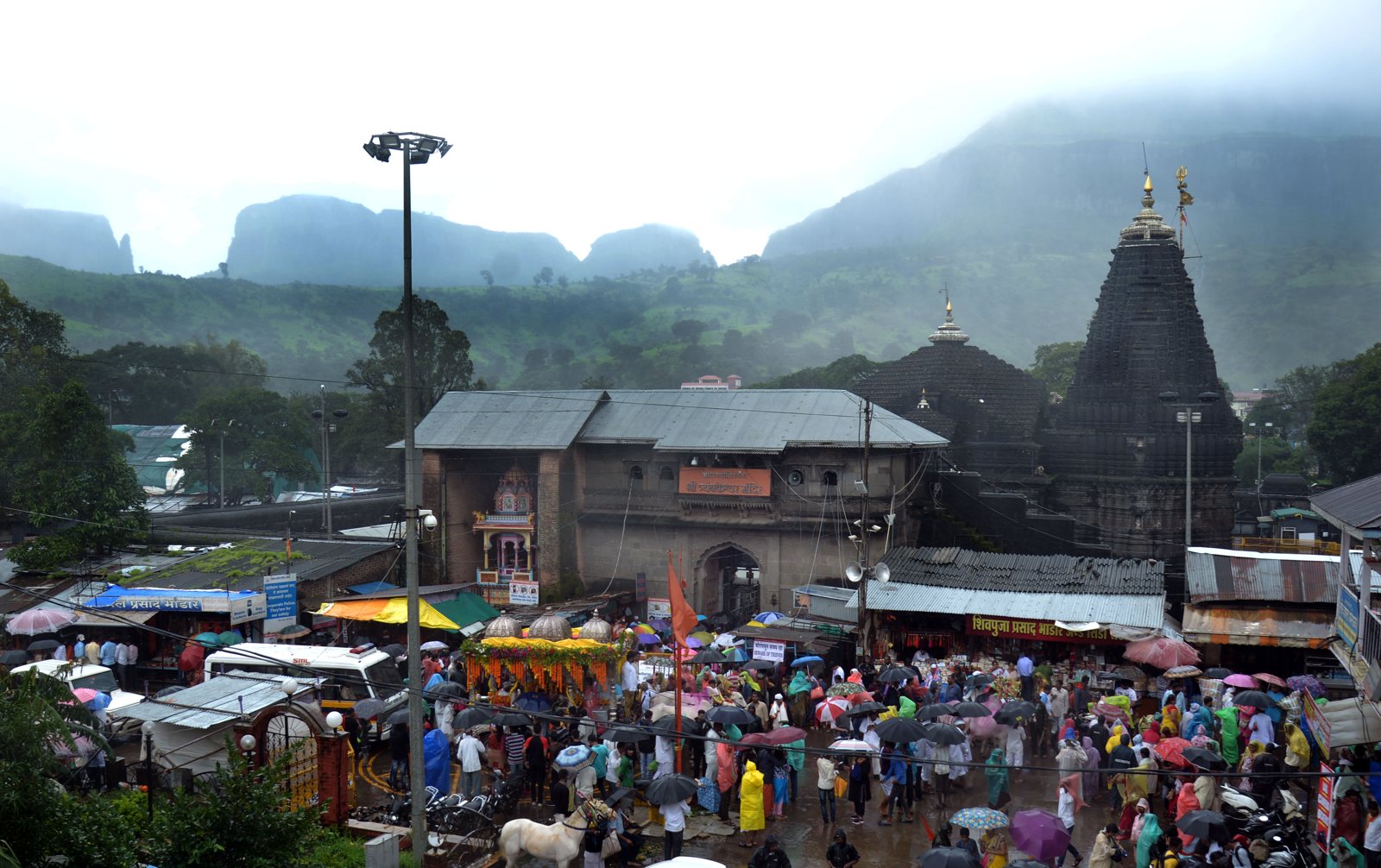
Brahmagiri, the Godavari pilgrimage landscape and Trimbakraja’s processions to Kushavarta.
Trimbakeshwar Temple and the surrounding hills, photographed in 2018. Photograph source · Prashant Kharote · CC BY-SA 4.0. Image resized and compressed; display crop may vary.
श्री त्र्यंबकेश्वर मंदिर
Trial draft · Needs verification. Open research items are listed in the guide; mobile review and current visitor-detail checks are not complete.
Identity and setting
Trimbakeshwar stands at the foot of Brahmagiri near Nashik. The temple trust associates the mountain with the Godavari and identifies the shrine as one of the twelve Jyotirlingas. Trimbak is the temple town; Nashik is the larger regional gateway. These names should not be used interchangeably when planning accommodation or transfers.
History and the wider sacred town
The trust attributes the present temple to Peshwa Balaji Bajirao’s eighteenth-century patronage on an earlier temple site. It records the Sansthan’s public-trust registration in 1954. Its account also highlights Sant Nivruttinath’s samadhi in Trimbak and the Varkari pilgrimage associated with him. This gives the town a devotional history extending beyond the main Jyotirlinga.
The threefold linga and the Godavari tradition
Maharashtra Tourism describes the linga’s threefold form as representing Brahma, Vishnu and Shiva. Its account connects the Godavari with the penance of Gautama and Ahalya in the Brahmagiri landscape. This is the shrine’s sacred origin narrative, distinct from the eighteenth-century rebuilding. The black-stone temple and its carved architectural treatment provide the visible setting for that worship. Kushavarta belongs to the sacred town’s water landscape and Monday processions; it should be planned as its own stop rather than confused with the sanctum.
Daily and weekly worship
The trust’s daily programme distinguishes morning Brahma worship, midday Mahadev worship and evening Vishnu worship. Its festival page records a Monday palanquin procession of Trimbakeshwar to Kushavarta Tirtha for worship. Exact hours and festival exceptions should be reconfirmed from the current programme, especially when planning attendance rather than a general visit.
Annual observances
The trust describes Gudhi Padva worship and a procession, special ornamentation in Shravan, and a Mahashivaratri palanquin procession with night-time kirtan. During Kartik it records kirtan, Trimbakraja’s chariot, worship at Kushavarta and lighting the deepmal after the return. These details explain the sequence and sacred spaces; the guide does not convert the recurring calendar into unverified Gregorian dates.
Booking distinctions and prasadam
The trust expressly states that its online Rudrabhishek and Laghurudra bookings are remote services, not permission for physical participation at the temple. A donation-darshan pass is a different service. Check the exact product and terms before booking. A current prasadam menu and temple-approved flower list have not been established here; general Shiva offerings are not substituted for local instructions.
Accommodation and a suggested visit
The trust identifies Shivprasad Bhakta Niwas and provides an accommodation channel. Confirm room availability before arrival. As an editorial suggestion, organise the visit around main-temple darshan, then allow a separate period for Kushavarta and the town’s other sacred associations. A climb on Brahmagiri is a separate undertaking; its current route and physical demands should not be folded into a promised short temple visit.
Regional pilgrimage connections
Bhimashankar and Grishneshwar are Maharashtra Jyotirlinga companions. They require substantial separate travel planning and are not nearby-town stops. The cards below help explore the religious collection, not estimate a road circuit.
Details still requiring confirmation
Current entry and dress rules, accessibility, offerings, prasadam collection and map-checked local distances remain open. These require temple-specific confirmation before the guide is marked ready.
Frequently asked questions
Does online Rudrabhishek mean I can join physically?
The trust’s published booking notice says that service is conducted remotely and does not provide physical participation.
What happens on Mondays?
The trust records a palanquin procession to Kushavarta Tirtha and worship there; confirm current arrangements before attending.
Are the other Maharashtra Jyotirlingas close enough to treat as local stops?
No local-distance claim is made. Plan each transfer separately.
Sources and verification
Sources checked on 20 October 2026. Follow newly issued temple notices for current arrangements.
Explore the Jyotirlinga collection
These are connections within the sacred collection, not nearby stops or a timed travel circuit.


