
Varanasi, Uttar Pradesh
Kashi Vishwanath Temple
Kashi’s Jyotirlinga, Ahilyabai Holkar’s temple and a daily rhythm of successive aartis.
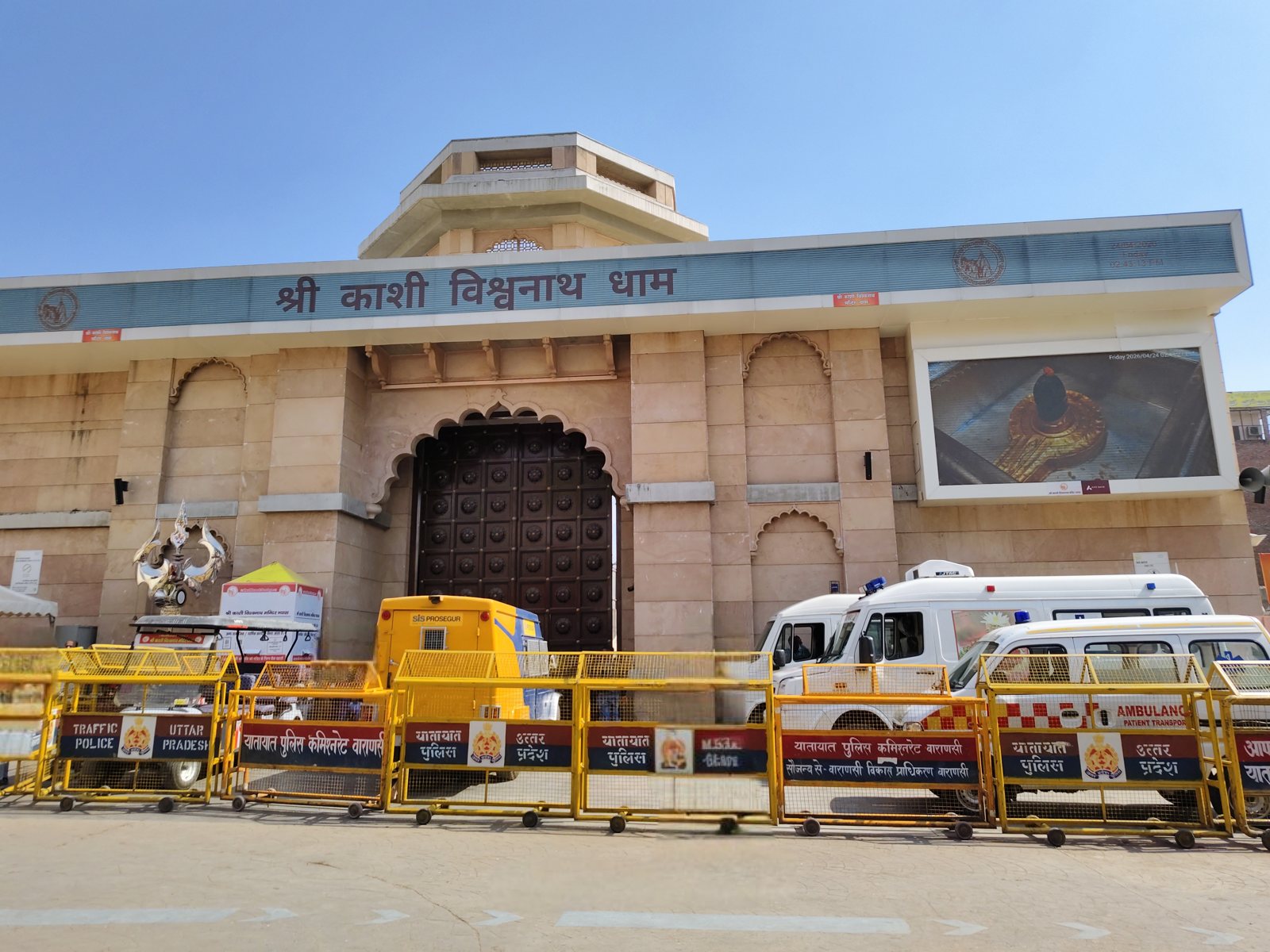
Entrance to Kashi Vishwanath Dham in Varanasi, photographed in 2026; not a photograph of the sanctum. Photograph source · Aliva Sahoo · CC BY-SA 3.0. Image resized and compressed; display crop may vary.
श्री काशी विश्वनाथ मंदिर
Trial draft · Needs verification. Open research items are listed in the guide; mobile review and current visitor-detail checks are not complete.
Identity and devotional significance
The temple trust identifies Shiva here as Vishwanath or Vishweshwara, the Jyotirlinga at the heart of Varanasi. In its devotional account, darshan is connected with liberation and spiritual knowledge. These beliefs explain the shrine’s importance to pilgrims; they are not promises of an outcome for a visit or purchase.
Documented historical milestones
The trust dates the present temple to Ahilyabai Holkar’s patronage in 1780 and records Maharaja Ranjit Singh’s gold donation in 1839. These are historical milestones distinct from Kashi’s sacred origin traditions. The trust’s history page contains some older descriptions of the building, so it should not be read as a complete survey of today’s Dham precinct.
Recognising the temple
The guide’s photograph shows an entrance to Kashi Vishwanath Dham, not the sanctum or the linga. The surrounding complex and circulation routes should be understood through current official signs. Varanasi has other Vishwanath-named shrines; check the exact destination when arranging a transfer or searching for a booking.
Daily aarti sequence
The official rituals page describes Mangala Aarti, midday bhog, Sapta Rishi Aarti, evening shringar/bhog and Shayan Aarti. It lists Mangala Aarti from 3 to 4 am and Shayan Aarti beginning at 10:30 pm. A midday AM/PM inconsistency in the source means that interval is not reproduced as a precise time here. Use the current booking page and ticket instructions for participation.
Shravan and the festival calendar
The trust describes a changing sequence of Monday adornments during Shravan: Shiva’s decoration, the movable images of Shiva and Parvati, Ardhanarishvara and Rudraksha adornment. It also records Jhoola Shringar during the month. These are different expressions of the divine family rather than four identical festival days. Its festival account describes Mahashivratri vigil and offerings including fruit, flowers, milk and bel leaves. Dev Deepawali belongs to the wider riverfront celebration at Kartik Purnima; a ghat event should not be confused with a booked sanctum ritual. Current participation rules and annual dates must still be checked.
Prasadam and worship services
Bhog is part of the temple’s daily ritual sequence. The trust links an official Shri Kashi Prasadam service from its portal. The availability of that service does not establish a particular free distribution menu inside the temple. Confirm what is included with a service and where collection takes place. Temple-specific flower permissions and a current weekly or monthly seva list still require verification.
Entry, clothing and puja materials
The trust’s FAQ advises decent clothing for ordinary darshan and prohibits phones and other gadgets inside. It identifies free lockers and distinguishes free general entry from paid services. For Rudrabhishek, it says some tickets include materials but milk is purchased separately; check the exact booking inclusions. Its FAQ lists Mangala Aarti at 3–4 am, midday Bhog at 11:15 am–12:20 pm, Sapta Rishi at 7–8:15 pm and night Shringar at 9–10:15 pm. These published FAQ times differ from parts of the older rituals page. Follow the current ticket and help desk instructions if they conflict.
Planning the visit
Choose first whether the priority is ordinary darshan or a particular aarti. Then arrange arrival and lodging around that confirmed time. A pre-dawn service is easier to plan with the previous night in Varanasi rather than a tight arrival connection. The trust links guest-house services, but room availability and rates must be checked directly. This page does not claim a measured queue duration or door-to-door transfer time.
Nearby worship and wider connections
A complete local Kashi circuit needs separate verification of each shrine, entry arrangement and walking route. The related Jyotirlingas below are theological connections across the collection, not nearby Varanasi stops. Avoid interpreting a sacred-group directory as a one-day itinerary.
Details still requiring confirmation
Accessible entry, mapped local connections and the current application of published visitor rules still need confirmation. The trust FAQ resolves the older page’s midday AM/PM problem but the two official schedules differ, so booked ticket instructions take priority. The article retains trial status until the remaining content and mobile checks pass.
Frequently asked questions
What is shown in the hero photograph?
An entrance to Kashi Vishwanath Dham in Varanasi. It is not a photograph of the sanctum Jyotirlinga.
Why is the midday aarti time not quoted?
The official ritual page contains an AM/PM inconsistency. The guide avoids silently correcting it without confirmation.
Does a darshan visit include every aarti?
Do not assume so. Check the trust’s current service and ticket instructions for the ritual you wish to attend.
Sources and verification
Sources checked on 20 October 2026. Follow newly issued temple notices for current arrangements.
Explore the Jyotirlinga collection
These are connections within the sacred collection, not nearby stops or a timed travel circuit.


