

Puri, Odisha
Sri Jagannath Temple
The Lord of the Universe in Puri: distinctive sacred images, a vast food tradition and the world-renowned chariot festival.
Jagannath, Balabhadra and Subhadra
Image source · Bernard Gagnon · CC BY-SA 3.0. Resized for display; the layout may crop card thumbnails.

Overview and sacred identity
Sri Jagannath Temple is the spiritual centre of Puri and one of the four principal Char Dham destinations. Jagannath is worshipped with Balabhadra and Subhadra, with Sudarshana also integral to the temple’s sacred arrangement.
The large-eyed wooden images give this shrine a visual identity unlike the stone or metal icons familiar from many other temples. Their form is not an unfinished version of another image; it belongs to a distinctive and complete tradition of worship.
History and the temple’s development
The monumental temple is associated with the Eastern Ganga dynasty, especially Anantavarman Chodaganga and later rulers who continued the work. The great tower and successive halls express the development of Odisha’s temple architecture.
Puri’s religious history also includes the devotional presence of Chaitanya and the enduring service communities of the temple. The shrine is therefore both a royal monument and an institution maintained by specialised ritual responsibilities across generations.
Architecture and the sacred complex
The curving main tower, the assembly hall and the sequence of ceremonial spaces exemplify Kalinga temple architecture. The Nila Chakra above the shrine is a prominent symbol, while the Lion Gate forms the best-known public entrance.
The complex contains important associated shrines, including Lakshmi and Vimala. Their presence helps explain the breadth of the temple’s ritual system. A visit should not reduce the site to a single tower or the annual chariots.
Nabakalebara and the wooden deities
Nabakalebara is the periodic renewal of the wooden bodies of the deities under specific calendrical and ritual conditions. It is not an annual festival and should not be advertised as a routine attraction available on any visit.
The tradition expresses continuity through renewal: the sacred identity remains while the physical forms are ceremonially replaced. This offers a particularly meaningful way to explain why material, ritual expertise and inherited service are so important at Puri.
Main deity and devotional image
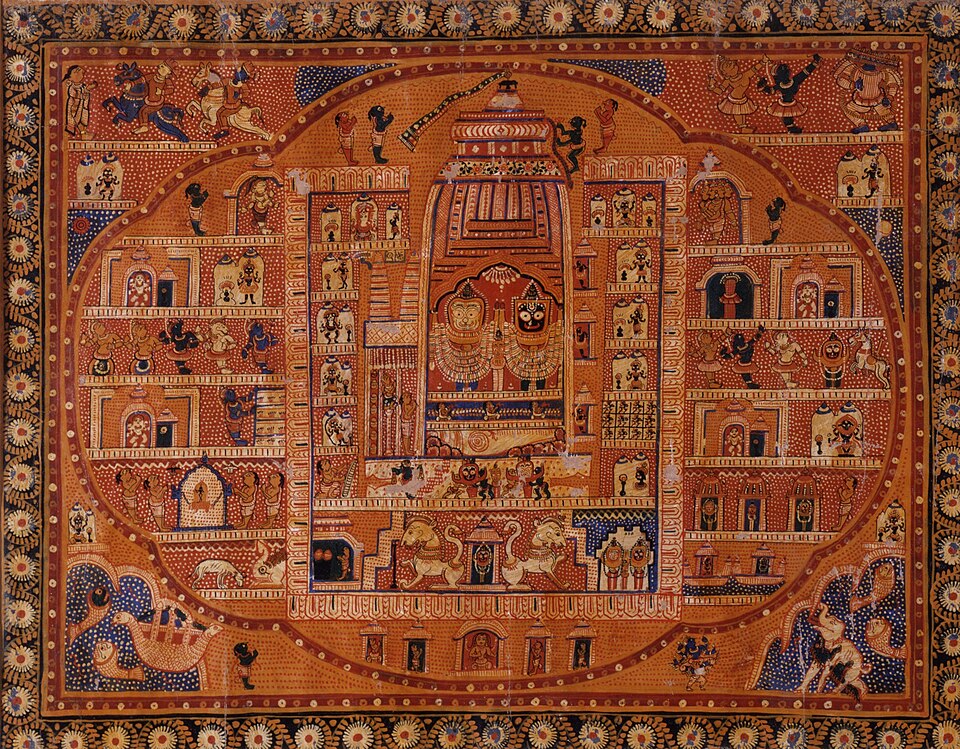
Historical devotional painting of Jagannatha, Balabhadra and Subhadra, LACMA M.82.107; not a current sanctum photograph.
Image source · Unknown artist, Puri, circa 1875–1900; LACMA · Public domain. Resized for display; the layout may crop card thumbnails.
Rath Yatra and the festival cycle
Rath Yatra takes Jagannath, Balabhadra and Subhadra in separate chariots towards Gundicha Temple. The outward journey, the stay and the return belong to a sequence of observances. Snana Purnima and the subsequent period before Rath Yatra also affect ordinary darshan.
Plan around the official event calendar and crowd arrangements. Seeing the chariots on the road is a different experience from entering the main temple. Entry restrictions and festival viewing opportunities should be checked directly with the authorities.
Mahaprasad and home offerings
Mahaprasad is central to Puri’s devotional life. The temple kitchen, offerings and distribution form a religious system rather than simply a local food attraction. Anand Bazaar is associated with the sharing and purchase of Mahaprasad.
Tulsi, jasmine, lotus and roses are familiar in many Vishnu household traditions. Keep a home flower offering distinct from the temple’s prescribed food service. The scale of the kitchen, its established service traditions and the distribution of Mahaprasad make food an important part of Puri’s sacred life.
Nearby temples and pilgrimage stops
These are surrounding-city or regional pilgrimage options, not all within walking distance. Use the map links to plan your route and confirm travel conditions.
Gundicha Temple
Puri
The destination of the outward Rath Yatra journey.
View on map →Loknath Temple
Puri
A significant Shiva shrine within the town’s pilgrimage landscape.
View on map →Mausi Maa Temple
Grand Road, Puri
A shrine associated with the chariot festival’s sacred route.
View on map →Flowers and leaves for home puja
These are general home-worship options associated with the deity, not a claim about the temple’s daily flower schedule. Follow your family tradition or priest’s guidance. Leaves and sacred grass are listed separately from flowers. Temple offerings must follow local rules.
- Flowers: Jasmine, rose and lotus.
- Leaves or sacred grass: Tulsi leaves are widely associated with Vishnu and Krishna worship.
Location and planning your visit
Puri, Odisha
Puri is connected by rail, with Bhubaneswar serving as a major regional air gateway. Check current temple entry eligibility, permitted belongings and darshan arrangements before travel. Rath Yatra requires a separate crowd-aware transport and lodging plan.
View on mapCommon questions
Who is worshipped at this temple?
Jagannath, Balabhadra and Subhadra
Which nearby temples can I include?
Gundicha Temple, Loknath Temple, Mausi Maa Temple
Can I use the home-puja flower list as a temple offering list?
The flower list is for home worship. Temple priests and the administration decide which offerings are accepted and how they are presented. Confirm locally before carrying flowers, food or ritual materials.
Sources and further reading
Sources include temple administrations, government tourism and district heritage pages. Sacred stories are identified as tradition. Check the linked official pages for current timings and festival arrangements.