
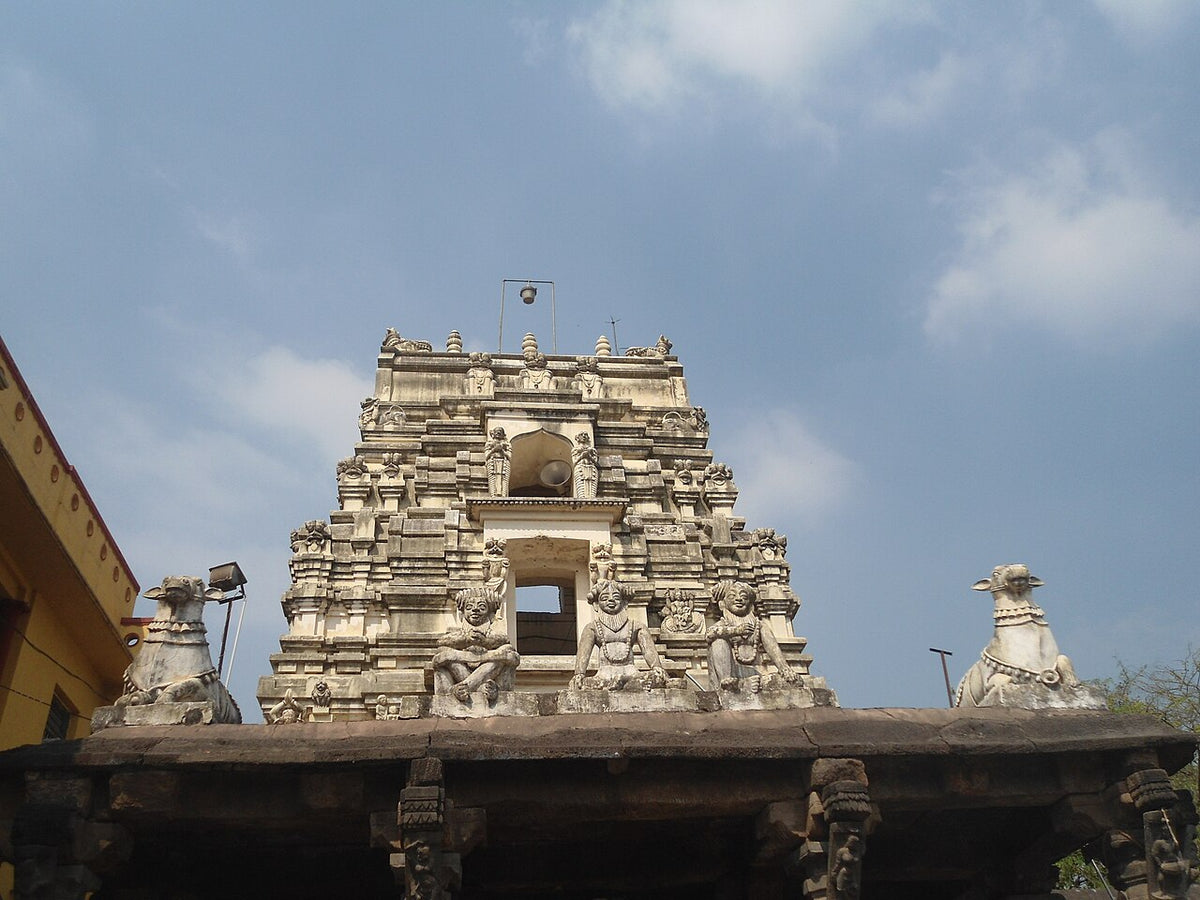
Draksharamam, Andhra Pradesh
Draksharamam Bhimeswara and Manikyamba Temple
Draksharamam combines a Pancharama Shiva shrine with the worship of Manikyamba. It is one of the strongest examples of why a temple guide should explain both the principal linga and the goddess tradition.
Bhimeswara Shiva and Manikyamba Devi
Image source · Adityamadhav83 · CC BY-SA 3.0. Resized for display.

Main deity and devotional image


Bhimeswara Shiva and Manikyamba Devi
Draksharamam combines a Pancharama Shiva shrine with the worship of Manikyamba. It is one of the strongest examples of why a temple guide should explain both the principal linga and the goddess tradition.
History and sacred tradition
The Pancharama narrative connects five Shiva shrines with fragments of a sacred linga following the defeat of Tarakasura. Draksharamam also participates in traditions of Daksha and Sati. These sacred accounts explain its place in pilgrimage, while inscriptions and stone construction provide a separate record of historical patronage.
Architecture and what to notice
The temple’s two enclosures and substantial stonework distinguish it from a small village shrine. Its tall linga and the arrangement of worship across levels are important architectural features. Manikyamba’s shrine has its own significance; visitors should leave time for it instead of viewing the temple solely through the Pancharama label.
Festivals and worship
Mahashivaratri and the Karthika season are important for Shiva devotees. Goddess worship forms another strand of the calendar. The official temple process should be used for special abhishekam and archana, since different shrines and ceremonies can require different arrangements.
A detail worth understanding
Draksharamam belongs in both Shiva and Devi browsing, with a Pancharama link and a carefully explained Shakti tradition. It should remain one comprehensive guide rather than duplicate pages competing under different deity names. Nearby Someswara shrines form an additional local sacred network.
Special flowers and leaves for home puja
| Offering | Home-puja guidance |
|---|---|
| Flowers | Jasmine, rose and lotus |
| Leaves and other materials | Bilva / vilvam / bel patra leaves |
Bilva is the distinctive Shiva offering and belongs in the leaves column, not the flower column. Jasmine or rose can accompany a simple home prayer. Avoid treating every plant mentioned in ritual literature as a shopping recommendation; use the familiar materials accepted by your household or priest.
Choose fresh, clean flowers and remove packaging before offering. These are broader household traditions, not a claim that every temple accepts every listed item. Follow your family’s custom for special vratas and ceremonies.
Home puja products
Choose the flowers and basic supplies you need. Each card opens the actual product page; prices and availability come from the store.
Flowers and deity-specific offerings
 Vilvam / Bel Patra (FL-VIL-003)$3.75View product →
 Malli / Jasmine Loose (FF-MAL-008)$8.00View product →
 Red Rose Buttons (FF-BRR-002)$6.00View product →
Home-puja essentials
 Brass Gulab Jyoti Deepam – 2 Inch Lotus Diya$5.40View product →
 Poo Thiri (Puja Lamp Wicks)$1.00View product →
 Pooja Deepam Oil (Diya / Vilakku Oil)$2.00View product →
Prepare a clean prayer space, water and a modest food offering according to family custom. Place the lamp securely, use oil suitable for it and keep flames away from flowers and fabric. Incense, a bell or additional vessels are optional; a simple daily prayer does not require every item.
Nearby temples and pilgrimage stops
Local shrines and longer regional options are distinguished below. Map links help you plan the journey; guide links appear where a separate page is available.
Someswara Temple
Kotipalli
A regional Shiva destination distinct from the five Pancharama temples.
View on map →Kumararama Bhimeswara Temple
Samalkot
Another Pancharama shrine; a separate regional drive.
View on map →Location and planning your visit
Draksharamam, Andhra Pradesh
Plan through Kakinada, Rajamahendravaram or Amalapuram according to your wider route. Do not assume the five Pancharama temples can be visited comfortably without accounting for travel and closures.
Check the linked temple or government sources for current timings, festival dates, permitted offerings and entry rules.
Find this temple on the map →Sources and image credits
Historical accounts and sacred traditions are distinguished in the guide. Consult the source pages for fuller context and current visitor information.
Temple image: Image source · Adityamadhav83 · CC BY-SA 3.0. Resized for display.
Devotional image: Image source · Iqbal Mohammed · CC BY-SA 2.0. Resized for display.