
Kanchipuram · Tamil Nadu
Thiruppadagam Pandava Thoothar Temple
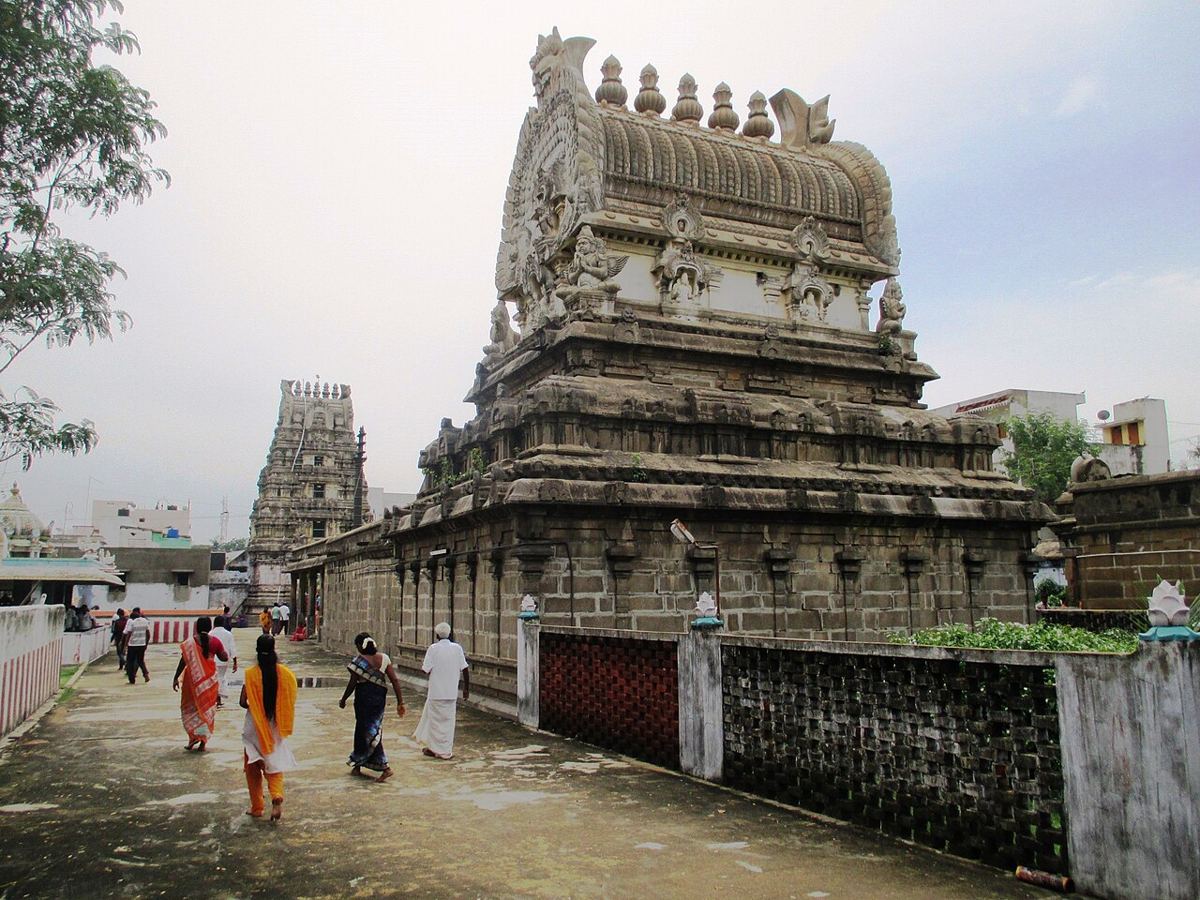
Thiruppadagam Pandava Thoothar Temple — temple exterior. Sources & photo credit ↓
Overview
Krishna is honoured here as the Pandavas’ messenger, with Rukmini worshipped as his consort. The Divya Desam is called Thiruppadagam.
History & origins
Pallava foundations and later Chola and Vijayanagara contributions are associated with the temple. Chola inscriptions survive on its walls.
Architecture & beauty
The four-tier entrance tower leads into a stone-enclosed complex. The deity’s identity recalls Krishna’s diplomatic role in the Mahabharata.
Worship & traditions
Krishna Janmashtami is a prominent annual celebration. The temple is a distinct Kanchipuram sanctuary, separate from Chennai’s Parthasarathy Temple.
Why the temple remembers Krishna as an envoy
Pandava Thoothar means the messenger of the Pandavas. The temple tradition recalls Krishna entering Duryodhana’s court on their behalf. A concealed pit and waiting wrestlers form part of the local telling of the attempt to overpower him; Krishna instead reveals his cosmic form, or Vishwarupa.
The enormous seated image gives this episode a lasting visual expression. The story concerns the dignity and power of the divine messenger, rather than Krishna as the charioteer on the battlefield. Keeping those settings distinct makes the temple’s name much more meaningful.
Janamejaya asks to see the same divine form
The local sacred account continues beyond the Mahabharata war. King Janamejaya hears the story from the sage Vaisampayana and longs to witness the form Krishna had revealed. Following the sage’s guidance, he bathes in the sacred water and undertakes penance here.
Krishna’s appearance to the king connects an epic event with this particular place of worship. Matsya Theertham is the temple’s named sacred tank. This is a devotional account of the shrine’s significance; it should be read separately from evidence about when its buildings were constructed.
Notice the hands as well as the scale
The seated Krishna is described as about 25 feet tall, but size is only part of the image’s character. He has two arms, with one hand conveying protection and the other the granting of grace. The human-like form remains recognisable even at this extraordinary scale.
The sanctuary faces east beneath the Bhadra Vimana. Look for the calm gesture and seated posture alongside the immense proportions: the image combines the overwhelming cosmic vision with an approachable presence for worship.
Inscriptions remember gardeners, food and lamps
Chola-period records preserve details of support for everyday worship. One merchant endowed a flower garden and land for its gardeners; other gifts supported daily curd and lamps. These are unusually concrete glimpses of the people and resources behind temple life.
The temple also preserves the memory of Arulala Perumal Emperumanar, a disciple of Ramanuja, whose bronze image is recorded in the hall. Flowers, food, light and teaching together offer a richer picture of the shrine than its monumental image alone.
Sources for the expanded guide
Nearby temples
Explore other shrines in the surrounding pilgrimage area. Check the route and current visiting arrangements before travelling.


Divine Flowers · Home Pooja
Bring devotion home
For Perumal or Venkateswara Pooja at home, explore fragrant Mullai strings, Maruvam and Dhavanam from Divine Flowers.

Mullai String (FF-MUS-017)
$14.00
View product
Maruvam (FL-MAR-001)
$7.00
View product
MariKolunthu / Dhavanam (VE-DHA-001) Vaikunta Ekadesi
$7.00
View productExplore Pooja garlands · Browse Pooja supplies
These are optional supplies for home worship. Choose according to your family tradition and product instructions. Divine Flowers is an independent retailer; these selections are not temple-endorsed offerings.
Sources & photo credit
- Wikipedia: Thiruppadagam Pandava Thoothar Temple — background and bibliography
- Photograph: Ssriram mt · Wikimedia Commons — CC BY-SA 4.0. Photograph resized for display; no subject alteration.
