
Thiruvelliyangudi · Tamil Nadu
Thiruvelliyangudi Kolavalvil Ramar Temple
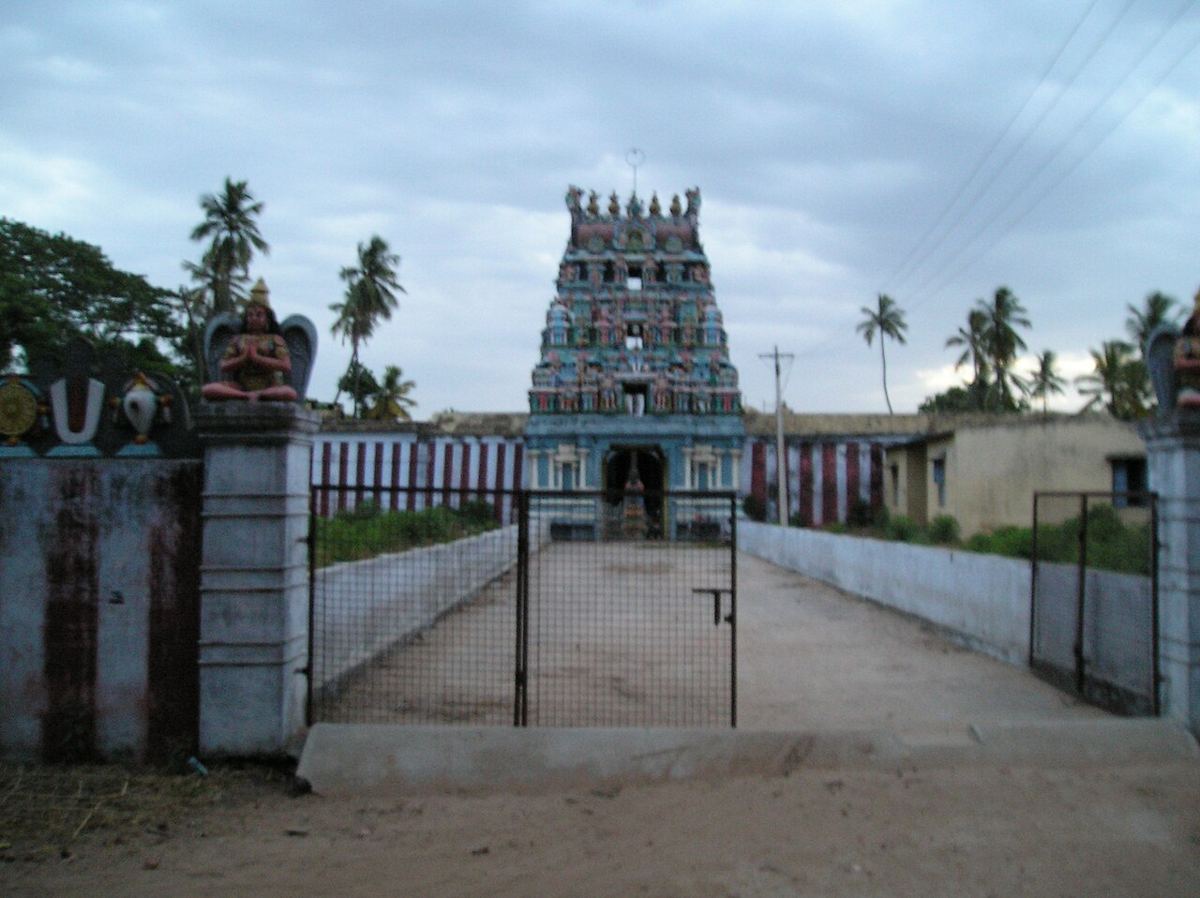
Thiruvelliyangudi Kolavalvil Ramar Temple — temple exterior. Sources & photo credit ↓
Overview
Kolavalvil Ramar and Maragathavalli are worshipped at Thiruvelliyangudi in the Kumbakonam region. The shrine forms part of the Divya Desam tradition preserved in the Alvars’ Tamil hymns.
History & origins
The available reference establishes the temple’s literary importance but does not securely date its first construction. An exact founding year is therefore not assigned.
Architecture & beauty
A four-tier entrance tower, stone enclosure and sacred water features define the temple’s setting.
Worship & traditions
The deity is associated with the sage Markandeya. This shrine is distinct from the similarly named Valvil Ramar temple at Thiruppullamboothangudi.
Why Garuda holds the conch and discus
Garuda’s four-armed form is the detail to look for at Thiruvelliyangudi. Two hands carry Vishnu’s conch and discus. The temple story explains that the divine architect Mayan wished to see the Lord as Rama, so Vishnu entrusted these emblems to Garuda while granting the requested vision.
This makes Garuda part of the narrative, not simply a figure placed opposite the main shrine. The Lord is worshipped here as Kolavilli Ramar in a reclining form, while Maragathavalli is the goddess. The combination of name, posture and Garuda’s attributes gives the shrine a distinctive identity.
Sukracharya, Vamana and the lamp
Another tradition connects the temple with Sukracharya. In the Vamana story, he obstructs the water vessel used by Mahabali to confirm his gift, and his eye is injured when the obstruction is cleared. He later worships here and is said to regain his sight.
The sanctuary’s enduring lamp, known as the netra deepam, is associated with this memory. The name Velli, linked with Sukra, also helps explain the place-name Thiruvelliyangudi. These are sacred associations of the temple; the story does not establish a medical effect of worship.
A red plantain is part of the sacred setting
The sthala vriksham is a red plantain, an unusual detail for visitors accustomed to large woody trees marking a temple’s sacred landscape. Temple accounts describe it growing amid the stone setting. Observe the plant from permitted areas rather than touching it or removing leaves.
Tirumangai Alwar praised this shrine. Rama Navami, Gokulashtami, Karthigai and Vaikuntha Ekadashi are among the observances recorded in its temple directory. Their different associations reflect the way Rama, Krishna and Vishnu worship meet in the life of this one temple.
The nearby connection with Periyavachan Pillai
Senganur, near Thiruvelliyangudi, is remembered as the birthplace of the Sri Vaishnava scholar Periyavachan Pillai. This adds a connection with the interpretation and teaching of sacred poetry to a journey otherwise focused on temple architecture and darshan.
Thiruvelliyangudi lies off the Kumbakonam–Tirupanandal route. Plan the last part of the journey as a village stop rather than assuming a main-road bus will leave you at the entrance. Check local transport and opening arrangements before linking it with Senganur or other nearby shrines.
Sources for the expanded guide
Nearby temples
Explore other shrines in the surrounding pilgrimage area. Check the route and current visiting arrangements before travelling.


Divine Flowers · Home Pooja
Bring devotion home
For Perumal or Venkateswara Pooja at home, explore fragrant Mullai strings, Maruvam and Dhavanam from Divine Flowers.

Mullai String (FF-MUS-017)
$14.00
View product
Maruvam (FL-MAR-001)
$7.00
View product
MariKolunthu / Dhavanam (VE-DHA-001) Vaikunta Ekadesi
$7.00
View productExplore Pooja garlands · Browse Pooja supplies
These are optional supplies for home worship. Choose according to your family tradition and product instructions. Divine Flowers is an independent retailer; these selections are not temple-endorsed offerings.
Sources & photo credit
- Wikipedia: Thiruvelliyangudi Kolavalvil Ramar Temple — background and bibliography
- Photograph: Ssriram mt · Wikimedia Commons — CC BY-SA 3.0. Photograph resized for display; no subject alteration.
