
Tirumala · Andhra Pradesh
Varahaswamy Temple
Bhu Varahaswamy is the Tirumala shrine beside Swami Pushkarini associated with Varaha’s priority in the hill’s sacred tradition. It adds an important dimension to a pilgrimage usually described only through Venkateswara.
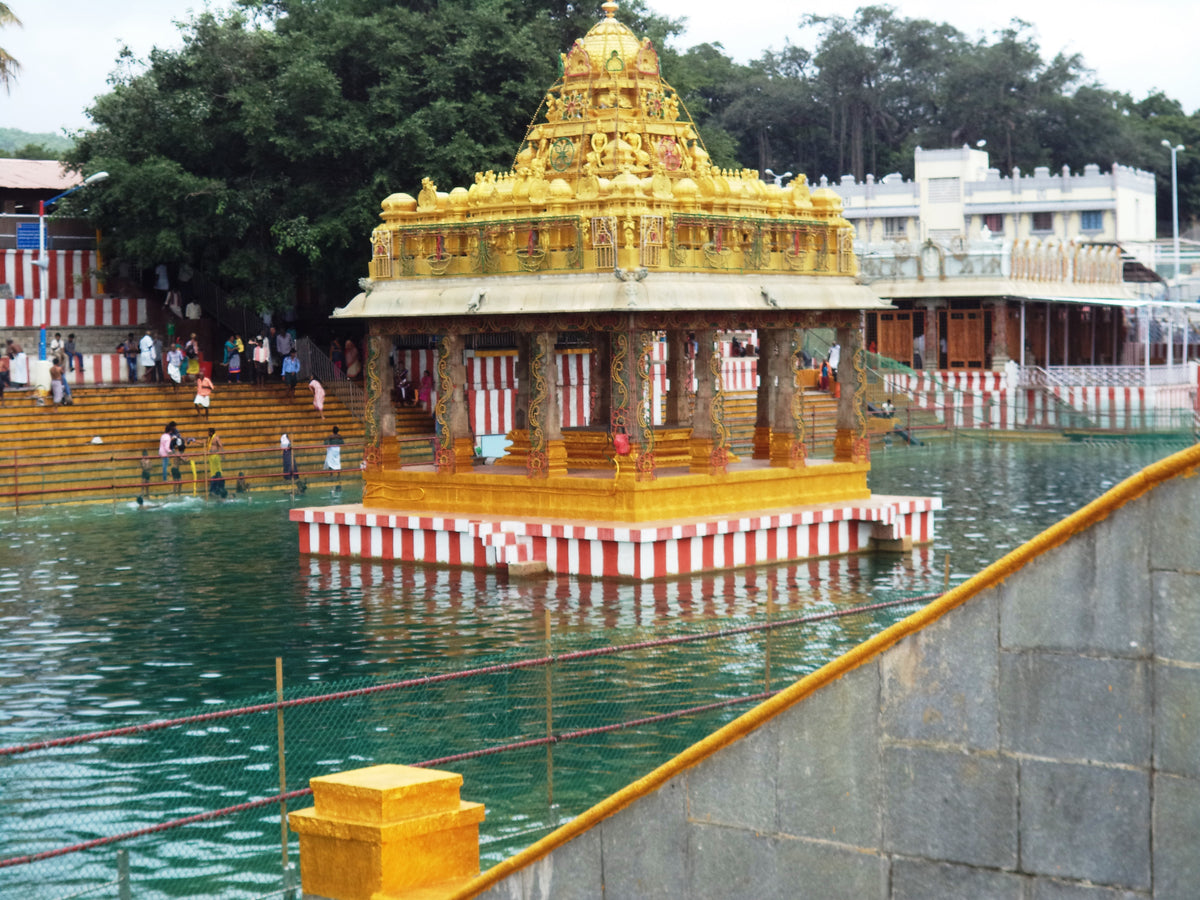
Swami Pushkarini, Tirumala — setting of the Bhu Varahaswamy shrine; this is not a close-up of the sanctuary. Image source · Siddharth Verma 101 · CC BY-SA 4.0. Resized for display.

Temple at a glance
- Location
- Tirumala, Andhra Pradesh, India
- Main worship
- Vishnu as Bhu Varahaswamy, with Bhudevi
- Visit focus
- Bhu Varahaswamy is the Tirumala shrine beside Swami Pushkarini associated with Varaha’s priority in the hill’s sacred tradition.
Main deity and devotional image


Vishnu as Bhu Varahaswamy, with Bhudevi
History and setting
The shrine is administered within the Tirumala Tirupati Devasthanams system. Its sacred identity is understood as preceding Venkateswara’s residence on the hill, while historical records also describe later renovation. Sacred precedence and the date of surviving architectural work are different kinds of evidence.
Sacred tradition and identity
Tradition tells that Varaha granted space to Venkateswara and received the first honour in worship and offerings. This is why devotees are encouraged to visit Varaha before Venkateswara. The shrine belongs to the Tirumala sacred landscape; it is not an additional independent entry that increases the canonical Divya Desam count.
Architecture and what to notice
Notice the relationship between the sanctuary and Swami Pushkarini. This waterside position helps explain its role in festival rites. Follow current circulation and security instructions around the tank rather than assuming all edges and approaches are open at all times.
Understanding Vishnu forms and temple worship
Vishnu appears in standing, seated and reclining forms, as well as in distinct avatars. The local name matters because it tells the worshipper which form and sacred narrative belong to the shrine. Lakshmi’s presence and the role of other associated deities also deserve attention. A broad Vishnu classification is a useful starting point, but it does not replace the temple’s individual identity.
The principal sanctuary image, the processional deity and a representative devotional painting serve different purposes. Temple processions may use a movable image while the principal form remains within the sanctuary. Visitors should therefore ask which form a festival programme or photograph depicts. For household worship, follow the family’s established practice rather than assuming that the highly structured service performed by trained temple priests must be reproduced in full.
Worship and offerings
TTD describes Varaha worship and the special place of the first offering in the Tirumala tradition. Ask official staff about present darshan arrangements. Tulsi and fresh flowers are relevant to home Vishnu prayer, but carrying personal offerings into Tirumala requires compliance with the actual temple procedures.
Festivals and the devotional calendar
Varaha Jayanti is a particular celebration of this deity. TTD also records rituals connected with the larger Tirumala festival calendar. Confirm the current year’s schedule; an archived news report establishes a tradition, not the date or access arrangements for your future visit.
Daily, weekly and monthly planning
Daily darshan, a weekday devotional preference and a monthly lunar observance are three different things. A daily opening can include a midday closure or pauses for dressing and food offerings. A weekday associated with the deity may attract more worshippers without introducing a separate service. Lunar dates move through the ordinary calendar, so check the date as well as the temple’s own programme.
When contacting the temple, ask for the ordinary darshan window, the service you want to attend, whether it requires a booking, and the accepted offering materials. If no current weekly or monthly programme is published, plan a normal darshan rather than assuming a ceremony will take place. The festival section above identifies the relevant local context; it is not a live booking timetable.
Flowers and leaves for home puja
| Offering | Home-puja guidance |
|---|---|
| Flowers | Jasmine, lotus and rose |
| Leaves and other materials | Tulsi / tulasi leaves |
Tulsi is the distinctive leaf offering in many Vishnu traditions. Jasmine (malli / mogra), lotus (thamarai / kamal) and rose are familiar accompanying flowers. Maruvam / marukozhundhu and davanam are aromatic foliage used in some Vaishnava flower offerings; their documented use at Tirumala does not establish a compulsory rule for every Vishnu shrine.
Use fresh, clean flowers and remove packaging before offering. These suggestions describe household practice; the temple may have its own rules for archana, garlands and ritual materials. Ask the authorised counter about a particular ceremony. Leaves and flowers should not be treated as medicines or promises of a particular outcome.
Home puja products
The cards below open actual products from Divine Flowers. Check the product page for options, availability and delivery details before ordering. A home flower selection is separate from a booking or offering service at the temple.
Flowers and deity-specific offerings
 Malli / Jasmine Loose (FF-MAL-008)$8.00View product →
 Pink Lotus (FF-LOP-011)From $2.00View product →
 Red Rose Buttons (FF-BRR-002)$6.00View product →
Home-puja essentials
 Brass Gulab Jyoti Deepam – 2 Inch Lotus Diya$5.40View product →
 Poo Thiri (Puja Lamp Wicks)$1.00View product →
 Pooja Deepam Oil (Diya / Vilakku Oil)$2.00View product →
For a simple household prayer, prepare a clean space, water and a modest food offering according to family custom. Place the lamp on a stable surface with space around the flame. Keep loose petals and cloth away from it. Choose the items you need rather than assuming every product is required for every prayer.
Nearby temples and regional pilgrimage stops
Use the locations below to distinguish a nearby city stop from a longer regional journey. Check each temple’s opening arrangements before setting out.
Venkateswara Temple
Tirumala
The principal hill sanctuary, linked by the Varaha tradition.
View map →Location and visitor planning
Plan this within Tirumala, beside Swami Pushkarini, rather than in Tirupati town below. Coordinate it with the timing of your confirmed Venkateswara darshan. Do not assume that a ticket for one service automatically includes every other shrine or special ritual.
Before leaving, confirm the opening window for that day, the final approach from your transport drop-off, and the arrangements for footwear and belongings. If anyone in the group needs assistance, ask about the actual route to the darshan area; the presence of a road to the entrance does not prove that the interior is step-free. Choose clothing suitable for worship and check any temple-specific requirement.
Leave room in the itinerary for the main sanctuary, associated shrines and a quiet look at the architecture. For each additional destination below, open its own map pin and check its own schedule. The suggestions distinguish local stops from longer regional journeys. No unverified driving time or queue duration is promised.
Find this temple on the map →Timings, festival programmes and access rules can change. Consult the official sources below or the temple directly for the day of your visit.
Frequently asked questions
Who is worshipped here?
Vishnu as Bhu Varahaswamy, with Bhudevi. Bhu Varahaswamy is the Tirumala shrine beside Swami Pushkarini associated with Varaha’s priority in the hill’s sacred tradition. It adds an important dimension to a pilgrimage usually described only through Venkateswara.
What makes this temple distinctive?
Notice the relationship between the sanctuary and Swami Pushkarini. This waterside position helps explain its role in festival rites. Follow current circulation and security instructions around the tank rather than assuming all edges and approaches are open at all times.
Which festival should I check before travelling?
Varaha Jayanti is a particular celebration of this deity. TTD also records rituals connected with the larger Tirumala festival calendar. Confirm the current year’s schedule; an archived news report establishes a tradition, not the date or access arrangements for your future visit.
Are the product suggestions required for temple entry?
No. The linked items are optional supplies for home worship. Temple admission, darshan, archana and prasadam have their own arrangements. Check the temple’s accepted materials before bringing an offering, and reuse the lamp and vessels already available at home.
Can I combine the visit with other temples?
Plan this within Tirumala, beside Swami Pushkarini, rather than in Tirupati town below. Coordinate it with the timing of your confirmed Venkateswara darshan. Do not assume that a ticket for one service automatically includes every other shrine or special ritual. Use the separate map links below for each destination; a regional connection does not mean that the temples are within walking distance.
Sources and image credits
Temple history and devotional traditions are distinguished in this guide. Information reviewed on 20 October 2026. Current visitor arrangements should be confirmed with the temple.
Header image: Image source · Siddharth Verma 101 · CC BY-SA 4.0. Resized for display.
Devotional image: Image source · Ravi Varma Studio · Public domain. Resized for display.