

Vrindavan, Uttar Pradesh
Shri Banke Bihari Temple
Banke Bihari is one of Vrindavan’s most beloved Krishna temples.
Banke Bihari — Krishna, worshipped as Shyama-Shyam
Image source · Ashish Bhatnagar (आशीष भटनागर) · CC BY-SA 3.0. Resized for display; card thumbnails may be cropped.
Main deity and devotional image
Banke Bihari — Krishna, worshipped as Shyama-Shyam
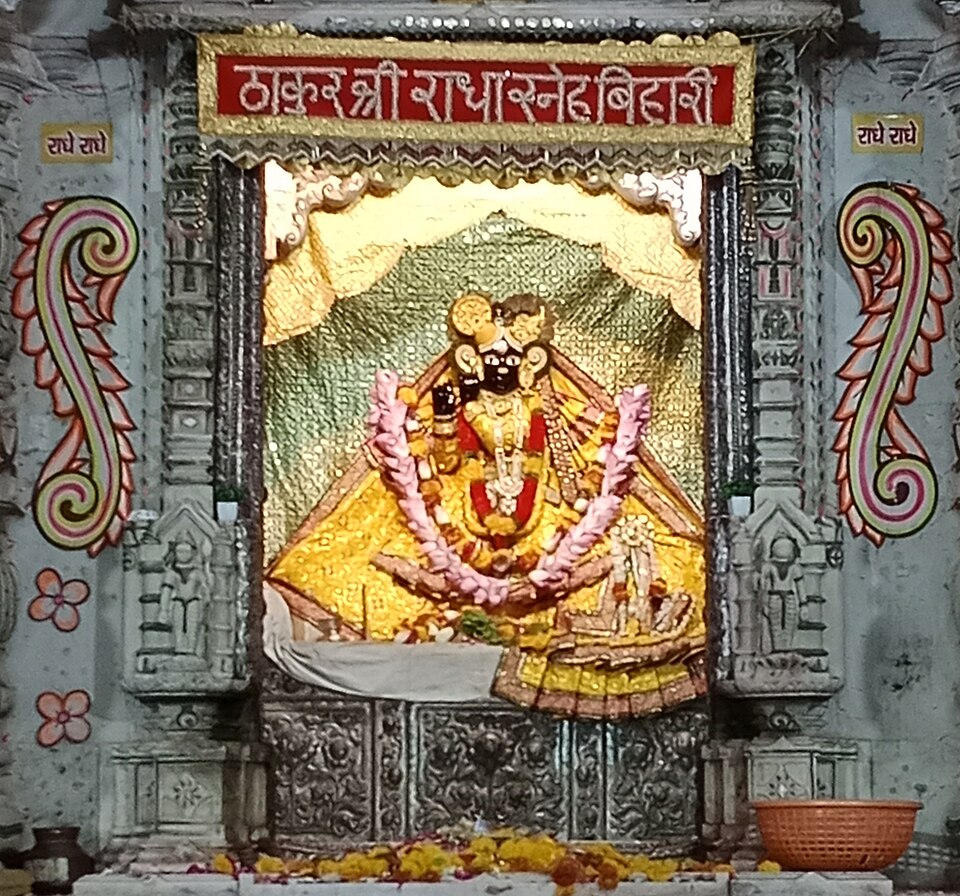
Related Vrindavan devotional image labelled Radha Sneha Bihari in the photograph; not the main Banke Bihari sanctum image.
Image source · Kridha20 · CC BY-SA 4.0. Resized for display; card thumbnails may be cropped.The intimate darshan of Bihariji
Banke Bihari is one of Vrindavan’s most beloved Krishna temples. The name evokes the graceful bent posture of the deity. Worship here is shaped by the intimate relationship between the devotee and Bihariji, with the curtain periodically interrupting darshan rather than leaving the image continuously exposed.
Swami Haridas and the temple building
The temple’s own account connects the image with Swami Haridas and Nidhivan. It dates the present temple to 1862 and describes its Rajasthani architectural character. The building date and the earlier devotional lineage are therefore separate parts of the history, not competing claims about one founding event.
Shyama and Shyam in one form
The sacred account says that Radha and Krishna appeared to Haridas and took a single form at his request. This explains why Bihariji is understood through the loving unity of Shyama-Shyam. It is a devotional narrative preserved by the temple’s seva tradition, rather than a documentary description of the image’s manufacture.
Architecture and the lanes of Vrindavan
The temple is approached through the dense lanes of old Vrindavan. The courtyard and façade provide a setting for congregational darshan, but the visitor experience depends strongly on the flow of people. Plan to see the architecture without stopping in a moving queue, and use the designated exit after darshan.
Shringar, Rajbhog and Shayan
The daily seva pattern centres on adornment, the principal food offering and evening rest. The temple’s routine differs from shrines where a very early morning public service is the norm. Tulsi is a distinctive home offering for Krishna; jasmine, rose and lotus can accompany it according to family custom.
Holi, Jhulan and Annakoot
Vrindavan’s Krishna calendar includes Holi, swing celebrations and Annakoot. The Banke Bihari temple gives these occasions its own seva character. Consult the temple’s festival calendar for the actual day and programme, since seasonal photographs often circulate long after the event they show.
Special flowers and leaves for home puja
Flowers: Jasmine, rose and lotus.
Leaves or sacred grass: Tulsi / tulasi leaves or a tulsi garland.
Tulsi has a special place in Krishna worship. Jasmine and rose are practical choices for a small home garland, while lotus can be reserved for a special occasion. Do not treat an elaborate festival flower display as a minimum requirement for everyday worship.
This is a home-worship guide, not a confirmed daily offering schedule for this temple. Follow your family tradition for a formal rite, and check locally before carrying flowers or food into a temple. Aromatic foliage, leaves and sacred grass are identified separately from flowers.
Home Puja product list
Choose the deity-specific flowers below, then add only the supplies you need. The links lead to Divine Flowers product or collection pages, where the current selection and availability can be checked. Reuse the lamp, vessels and bell you already own.
Flowers and leaves to shop
 Malli / Jasmine Loose
 Red Rose Buttons
 Pink Lotus


Tulsi is part of the devotional list above. A dedicated tulsi product was not confirmed in the store selection used for this guide; check the Fresh Leaves collection or source it locally. Do not replace it automatically with an unrelated leaf.
Basic home-puja supply list
- Diya or lamp, cotton wicks and puja oil suitable for your lamp.
- Puja plate, water bowl and spoon to keep flowers, water and food offerings separate.
- Puja powders such as the kumkum, turmeric or sandal preparation used in your household tradition. Choose the relevant items; all powders are not required for every deity.
- Dhoop or incense and a stable holder, if incense is part of your practice.
- Clean water and a modest food offering such as fruit, prepared according to the family’s custom. Use a clean cloth and a stable place for the deity image.
Optional festival or vrata additions
Puja garland · Kalash or lota · Puja bell · Fresh leaves · Other puja samagri.
A formal vrata or priest-led ceremony may need mango leaves, betel leaves, coconut, rice and additional materials. Obtain that ceremony’s list before shopping. These optional items are not all necessary for a daily prayer, and product purchases do not guarantee spiritual or material outcomes.
Nearby temples and pilgrimage stops
These include local shrines and longer regional pilgrimage options. They are not all within walking distance. Use the map links to plan travel; a guide link appears where a separate page is available.
Radha Raman Temple
Vrindavan
Krishna as Radha Raman; another historic seva tradition.
View on map →Radha Vallabh Temple
Vrindavan
Radha–Krishna devotion in a distinct sampradaya.
View on map →Krishna Balaram Mandir
Raman Reti, Vrindavan
Krishna and Balarama; a separate part of town from the old temple lanes.
View on map →Nidhivan
Vrindavan
Sacred site associated with Swami Haridas and Bihariji’s appearance; follow local visiting hours.
View on map →Location and planning your visit
Vrindavan, Uttar Pradesh
Approach Vrindavan from Mathura or the regional road network, then allow for local traffic controls and walking through the old lanes. Confirm the seasonal darshan hours through the temple. Festival days require considerably more time than an ordinary visit.
Use the linked temple or government pages below for current timings, festival arrangements and permitted offerings. Daily routines and access can change; this guide does not promise a fixed queue time.
Find this temple on the map →Sources and image credits
Temple administrations, government tourism and district sources are prioritised. Sacred stories are labelled as tradition. Home-puja flower choices describe broader devotional practice rather than an exclusive temple prescription.
- www.bihariji.org — MandirHistory.aspx
- www.bihariji.org — Annakoot.aspx
- www.incredibleindia.gov.in — mathura
Flower-tradition context: TTD’s record of flowers and aromatic foliage in Vaishnava festival worship. This record is specific to the ceremony described; it does not prescribe the daily offerings at every temple in this library.